theweightlossmedics.co.uk
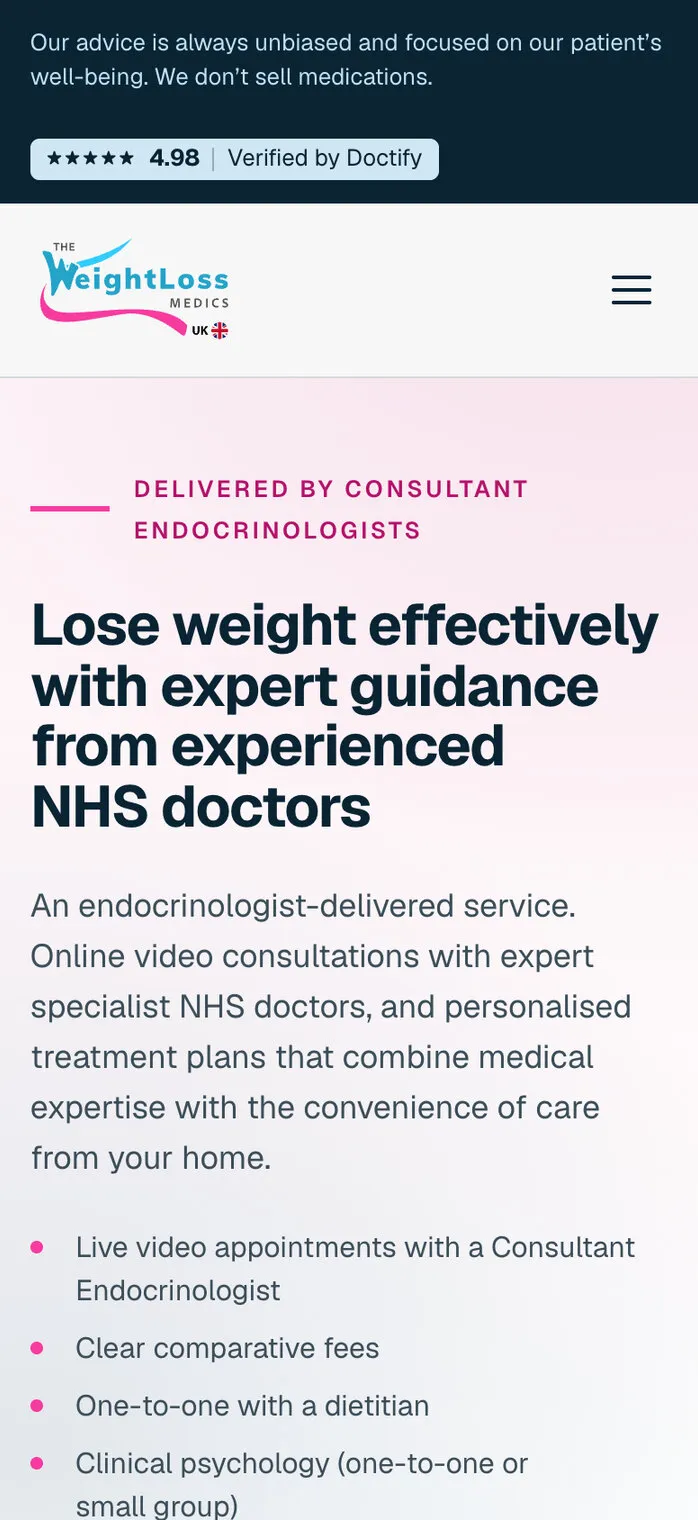
The UK site
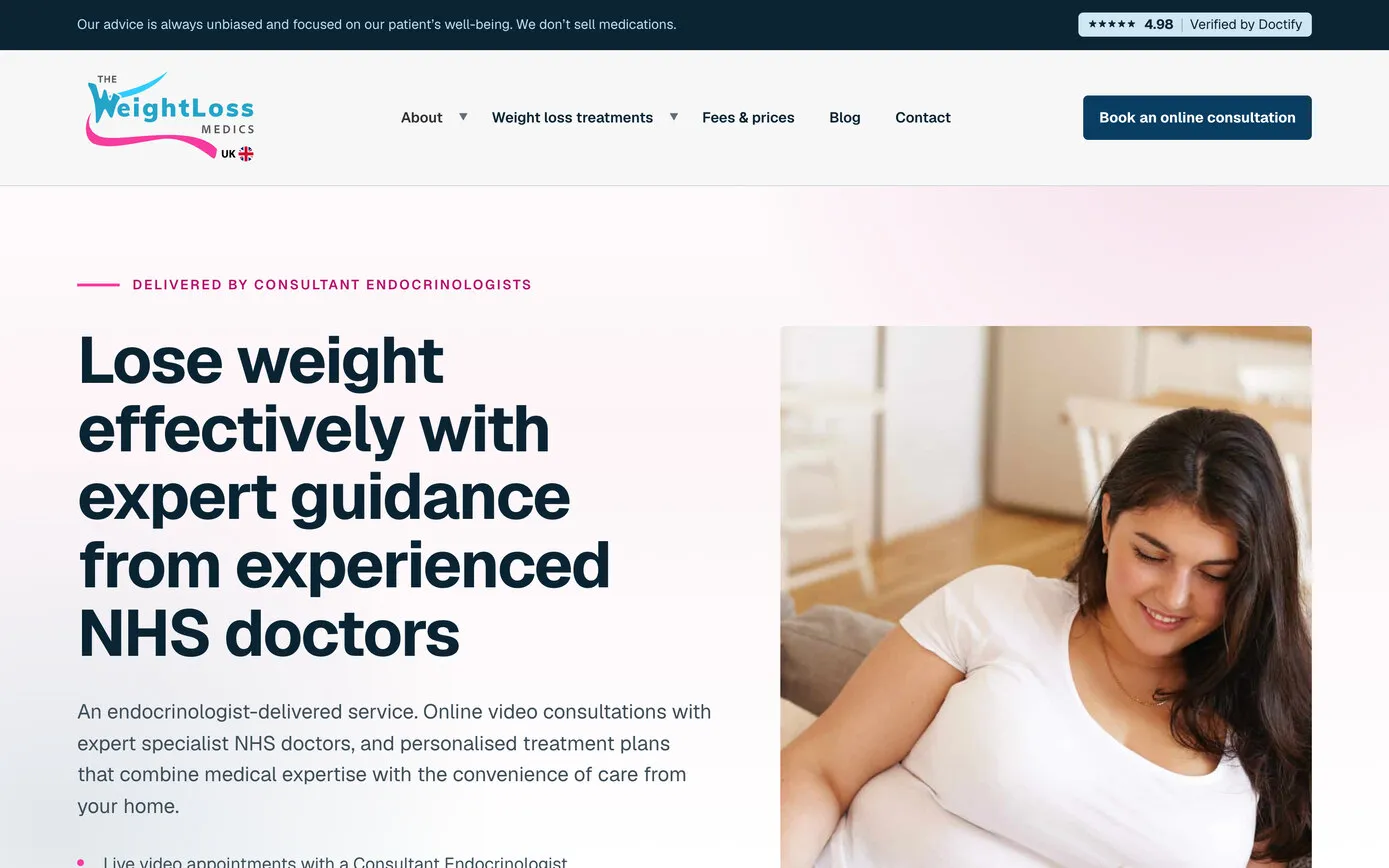
Rebuilt in September 2026: medical weight management delivered by Consultant Endocrinologists, by video, anywhere in the UK.
- Website
- Branding
Two Consultant Endocrinologists in Glasgow came to us in 2024 with an idea and nothing else: no name, no brand, no website. We named the practice, designed its identity, set up booking that keeps clinical records off the website, and built the site. Two years on there are two websites, one for the UK and one for Ireland, and clinics in Dublin and Letterkenny.
In April 2024 an IT partner we’ve worked with for years introduced us to Dr Andrew Kernohan and Dr David McGrane, Consultant Endocrinologists in Glasgow. They wanted to see patients by video anywhere in the UK, and for patients to book and pay online. They had no name, no domain and no brand.
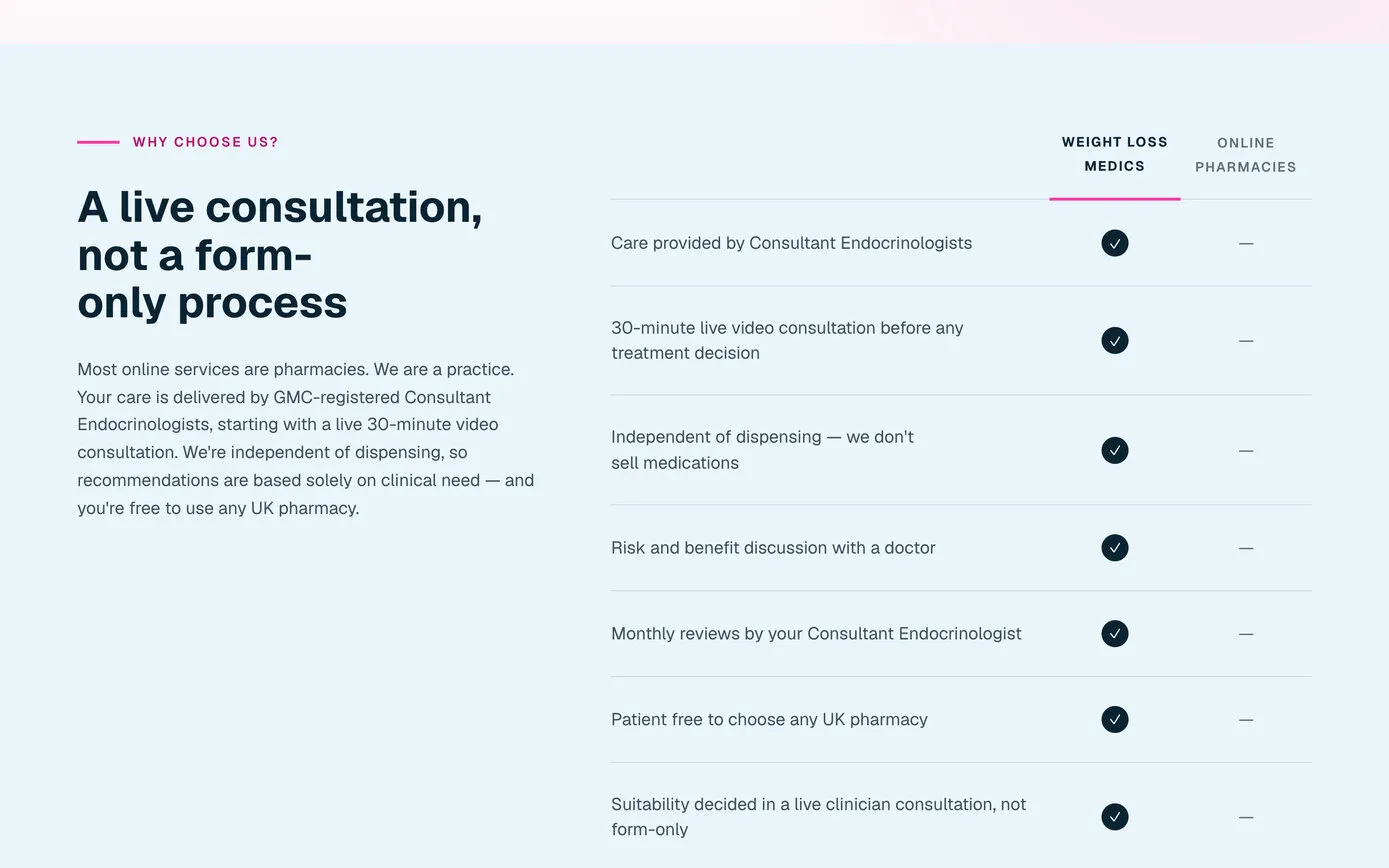
The market was crowded. Online pharmacies and supermarket “online doctors” filled the search results, most of them selling medicine after a questionnaire and a sign-off. The doctors were offering something different, a proper consultation with a specialist first, and the website had to make that difference obvious.
Andrew and I are keen to not be seen to be too ‘medical’ but appreciate our USP is us, and the fact we are doctors with expertise in this area.
We suggested The Weight Loss Medics, at theweightlossmedics.co.uk. It says exactly what the practice does. “Medics” tells people they’re dealing with qualified doctors who can prescribe, not an information site or a shop. “The” makes it sound definitive, and .co.uk says it’s a UK service.
The doctors agreed the same day and registered the domain that evening.
I like theweightlossmedics.co.uk. As you say, does what it says. Also distinguishes us from non-medic led services.
The brief was bright and approachable: something that would stand apart from the online pharmacies, suit men and women alike and stay clear of the usual weight-loss clichés, with no tape measures round waists and no obvious stock photography.
The logo, agreed in June 2024, is built around a hand-drawn W. A cyan ribbon sweeps up from it and a pink one runs under the name like an underline. The W works on its own as the website icon, and the ribbons carry through into backgrounds, borders and print.



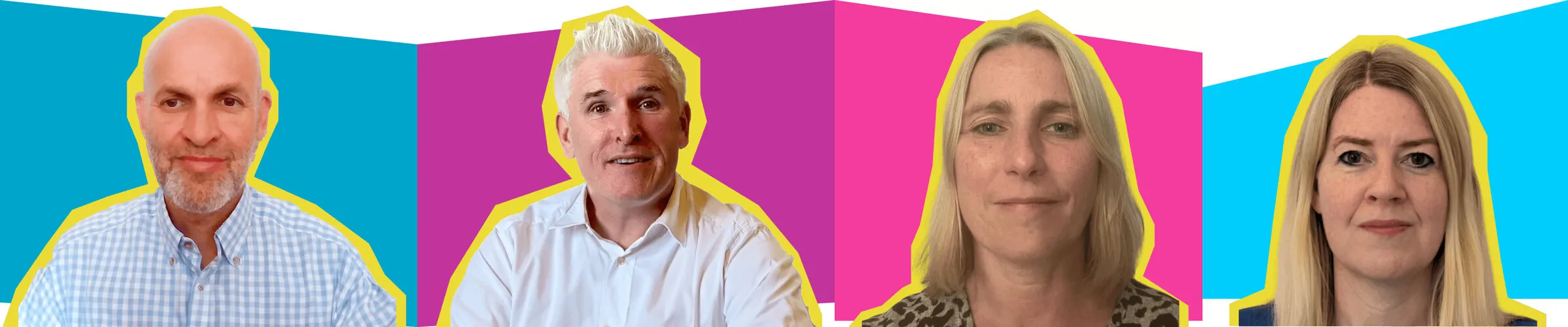
The four Consultant Endocrinologists, in the cut-out style used for the whole team on the websites and social media.
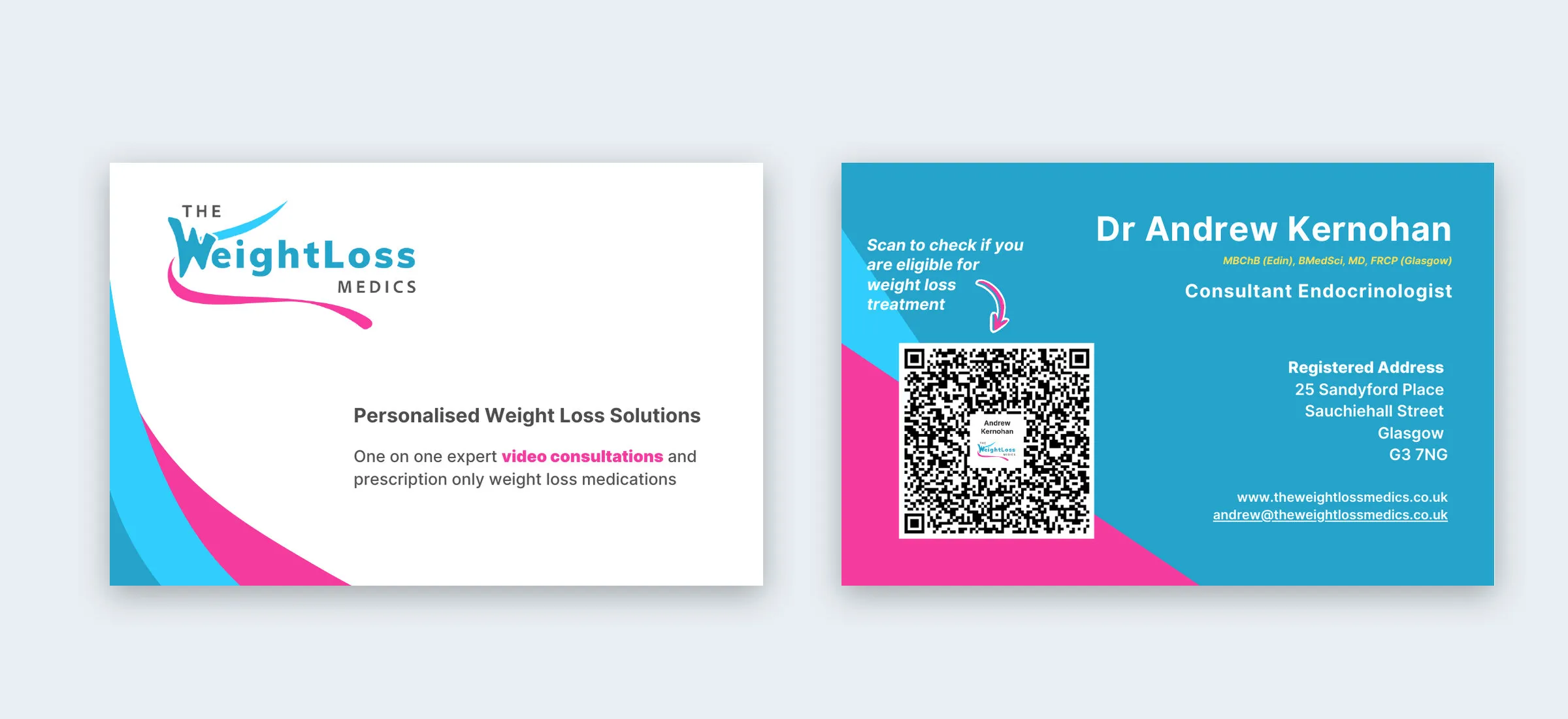
Business cards, 2024. The QR code on each doctor’s card carries its own tracking tag, so visits from it show up in the analytics.
We recommended keeping clinical records out of the website altogether. Booking, payment, the medical questionnaire and the video consultation all run in WriteUpp, a clinical system built for practices, and the website links to it.
That let the practice open before its website did. The booking pages went live in July 2024, the first appointment was booked and paid for on 25 July, and the website followed in August.
How a patient gets from the website to a consultation, and what follows.
People who check their BMI and leave an email address get a short series of emails over the next few days, with videos from the doctors about the service, the treatments and safety.
The forms seem to do very well. Nearly ½ of those who do a form book which is incredible.
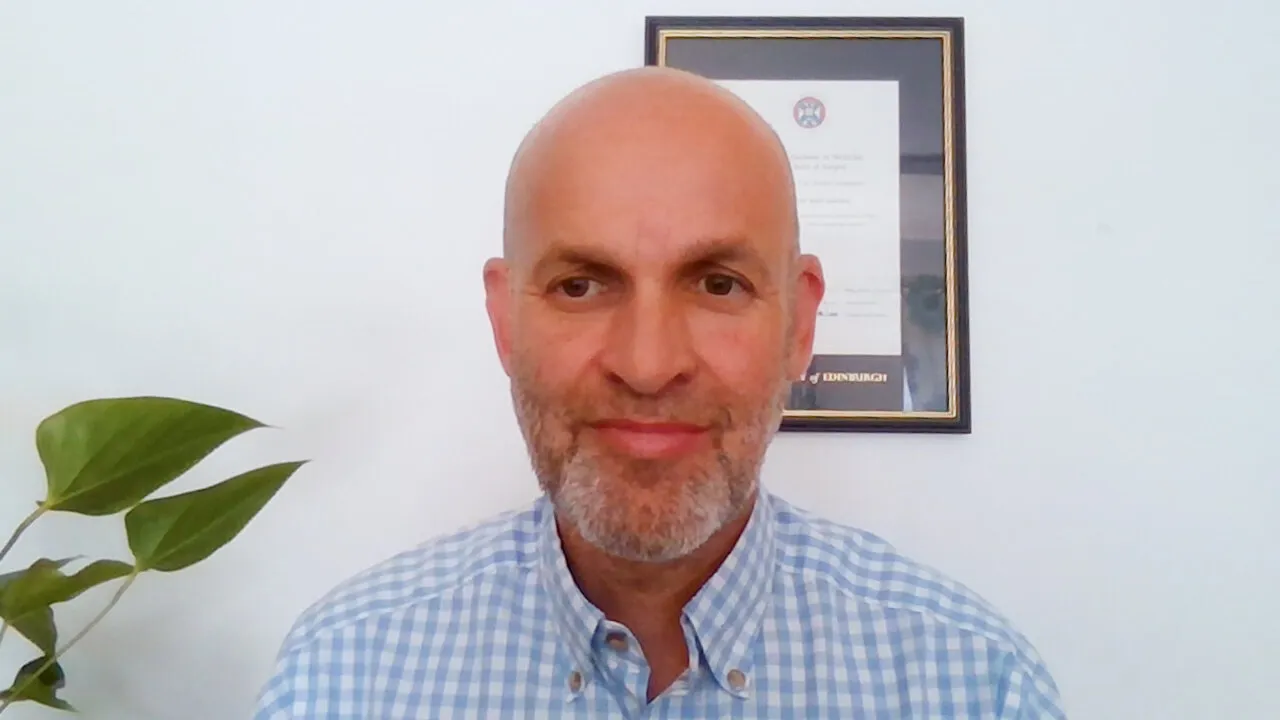
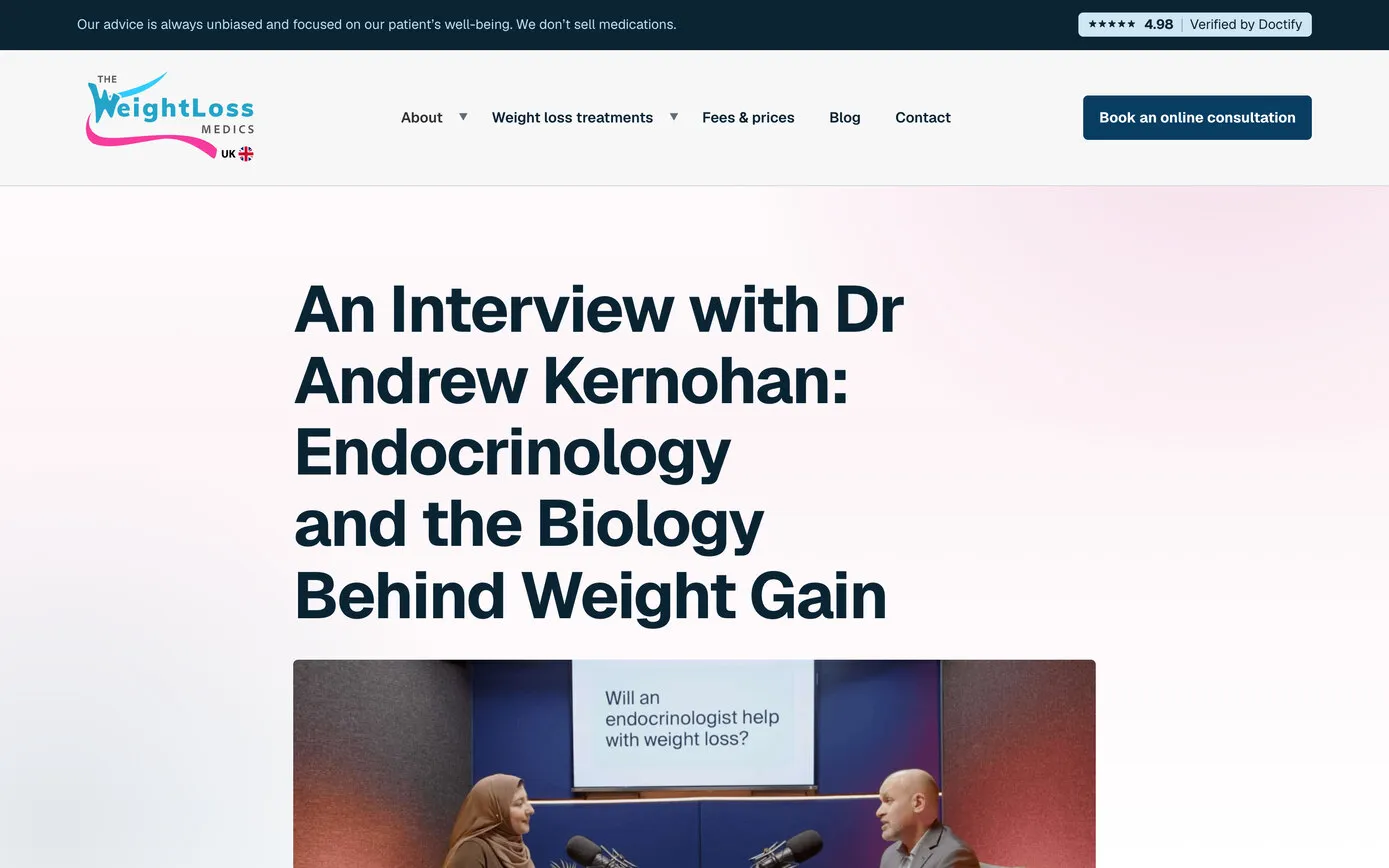
Our competitor research in 2024 found that none of the big online services let you hear from a clinician. So the doctors filmed short pieces to camera on their phones and webcams, with our notes on light, framing and sound, and we edited them: cleaned up the audio, graded the picture, and added music, the logo and captions for anyone watching with the sound off.
Dr Kernohan’s one-minute introduction has led the homepage ever since, and Dr McGrane’s film on how the service works became one of the most visited pages from Google in 2025. On the new sites, a video only loads when someone presses play, so nothing from Vimeo or YouTube runs before visitors have made their cookie choice.
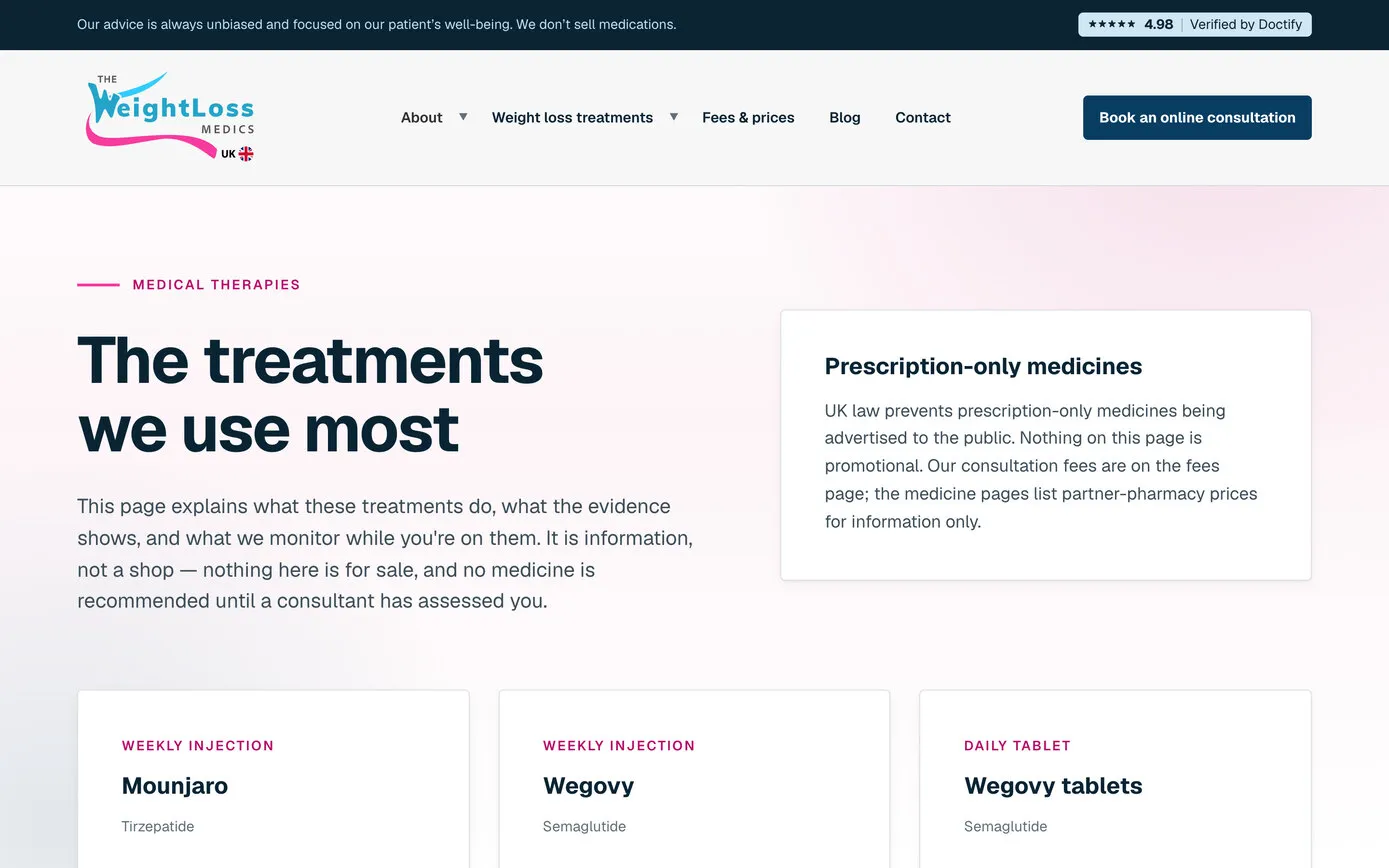
Prescription-only medicines can’t be advertised to the public in the UK or Ireland, a rule plenty of weight-loss websites ignore. This one has been written around it from the first audit: it promotes the consultation, and the medicines appear only as information.
In January 2025, with the Advertising Standards Authority about to start actively checking online weight-loss services, we reworked the site within days: new headline wording, medicine prices and banners taken off the fees and home pages, weight-loss figures taken out of testimonials, and treatment details moved to an information-only Medical Therapies page.
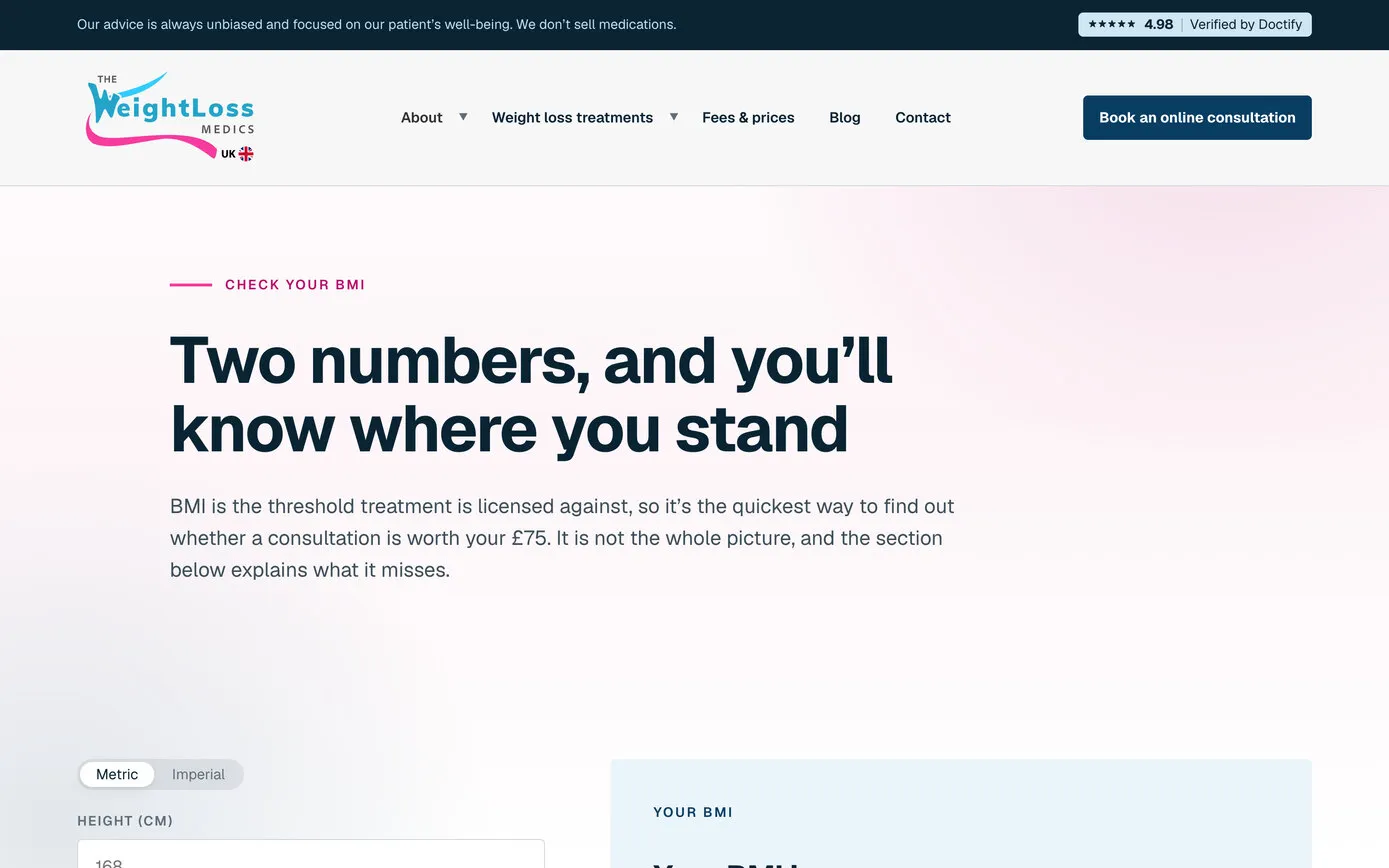
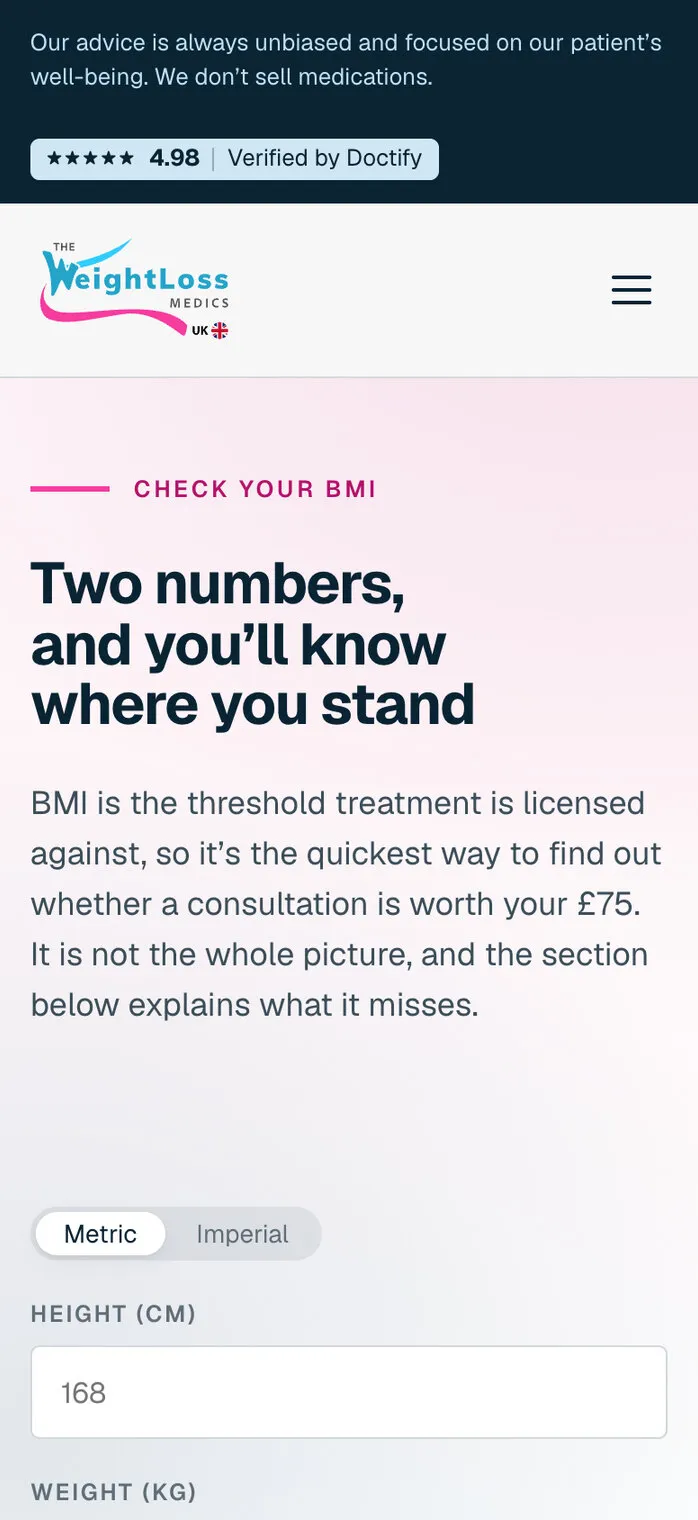
In 2026 the “Am I eligible?” quiz became a plain BMI check. It gives a number and a next step rather than a verdict, names no medicine, and leaves the decision to a doctor. The calculation happens in the visitor’s browser, so nothing is stored or sent. And on the UK site the service is “delivered by Consultant Endocrinologists”: some services that sell on a questionnaire call themselves “doctor-led” because a doctor signs it off, so the site doesn’t use the phrase.
I think we should make all these changes and err on the side of caution. I genuinely don’t think it will cost us any clients and it gives authority by avoiding the more promotional aspects.
In 2025 the doctors asked about buying a web address for every city. We advised against it, because that tactic stopped working years ago, and set out a plan to grow the one site instead: a page for each city written for that city, information-only pages about the treatments, and articles that respond to the news. The plan also looked ahead to AI search, with pages that assistants like ChatGPT can cite. ChatGPT now shows up among the site’s referrers most weeks.
The doctors review every piece before it goes live. Drafts reach them as shared documents in suggesting mode, so clinical corrections are tracked line by line. News and press become content too: a BBC Arabic interview turned into an article, a Women’s Health feature into a post, a patient survey into videos and articles. The December 2025 article on lower-dose Mounjaro is now the second most visited page from Google.
From June 2025 until the 2026 rebuild, an AI assistant trained on the website and on Dr Kernohan’s own answers took visitors’ questions: 171 conversations, with reports back to the doctors on what people were asking.
I asked lots of questions today and I couldn’t have responded better myself.
When the practice began seeing patients in Ireland, we recommended a separate website rather than an Irish section of the UK one. The rules are different, and so is the language: the HSE rather than the NHS, the Irish Medical Council rather than the GMC, euros rather than pounds. The first Irish site went live in December 2025 and was the top Google result for the practice’s name within two days.
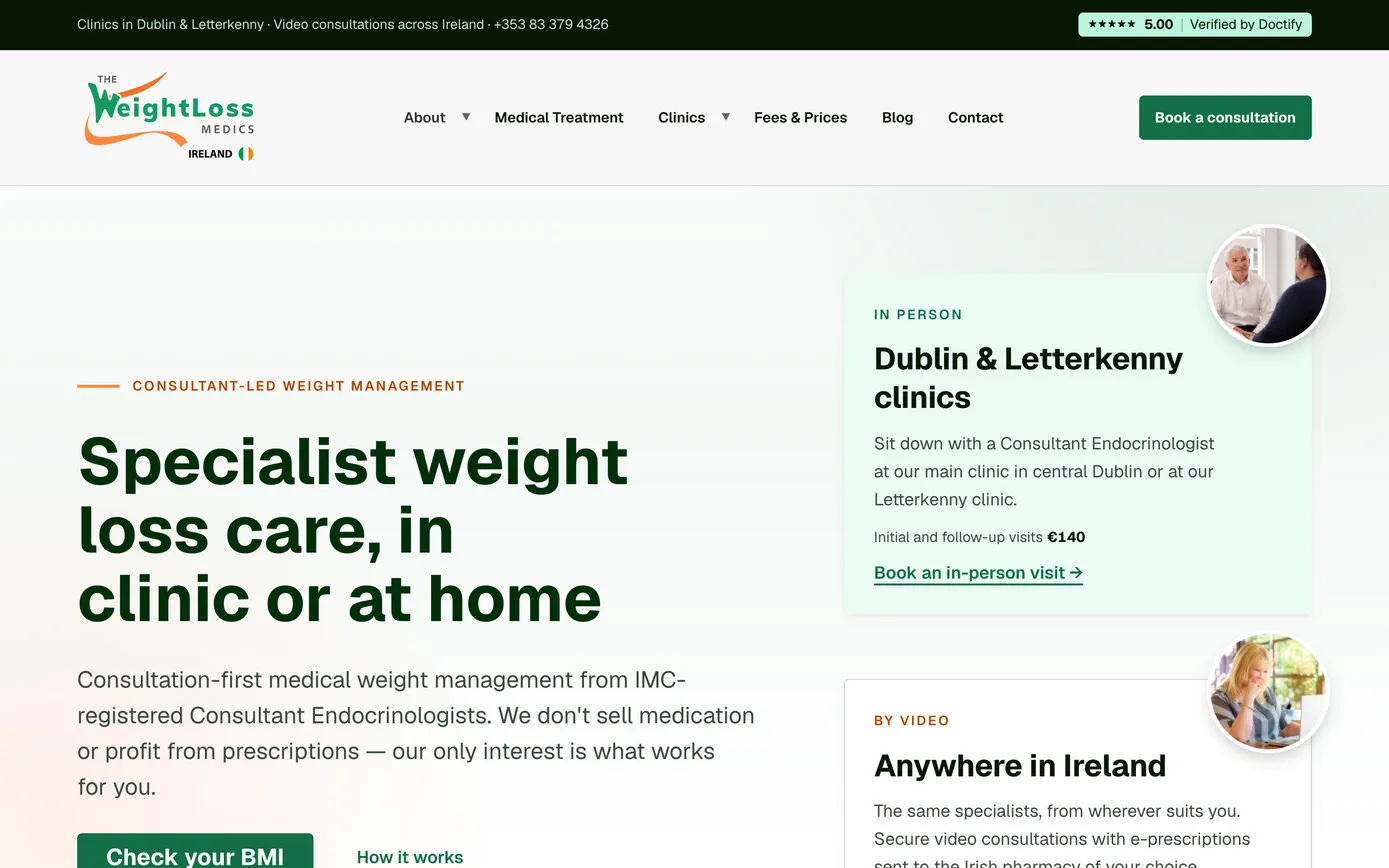
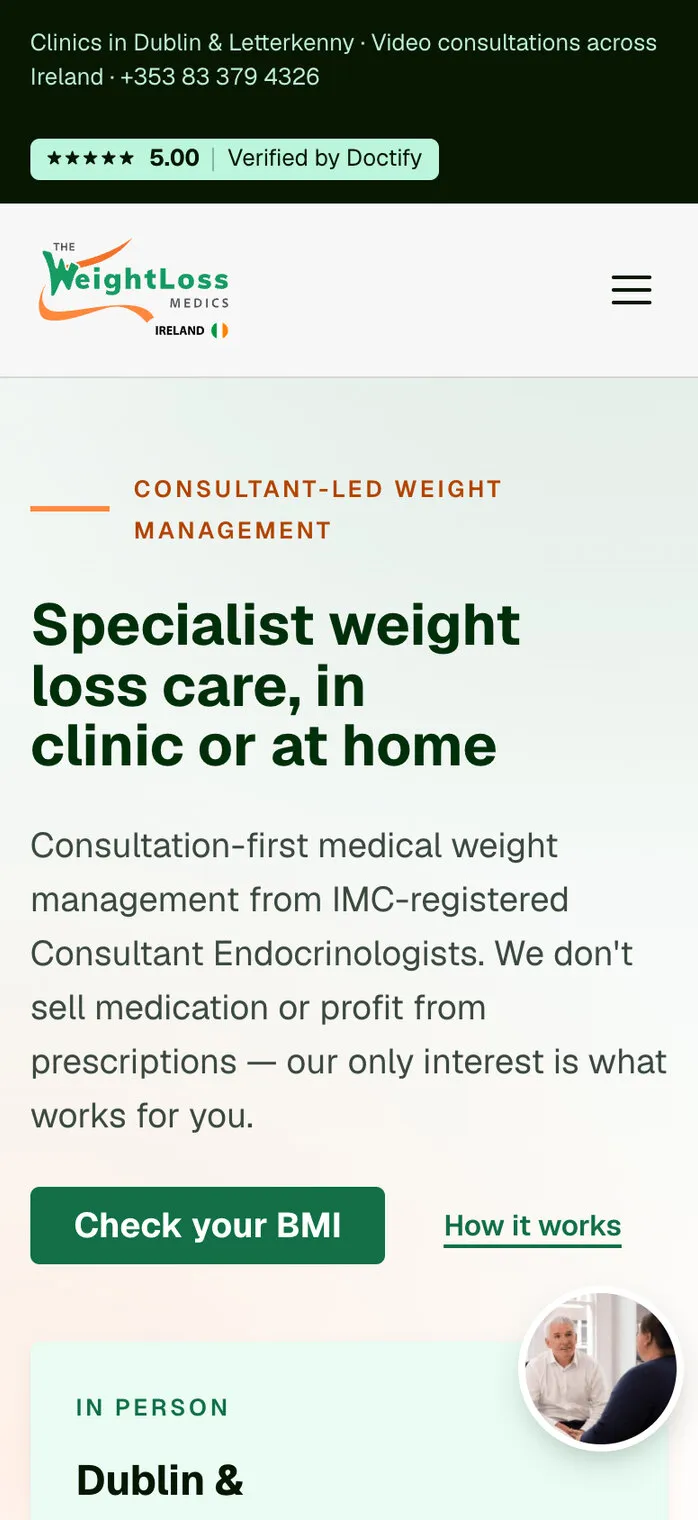
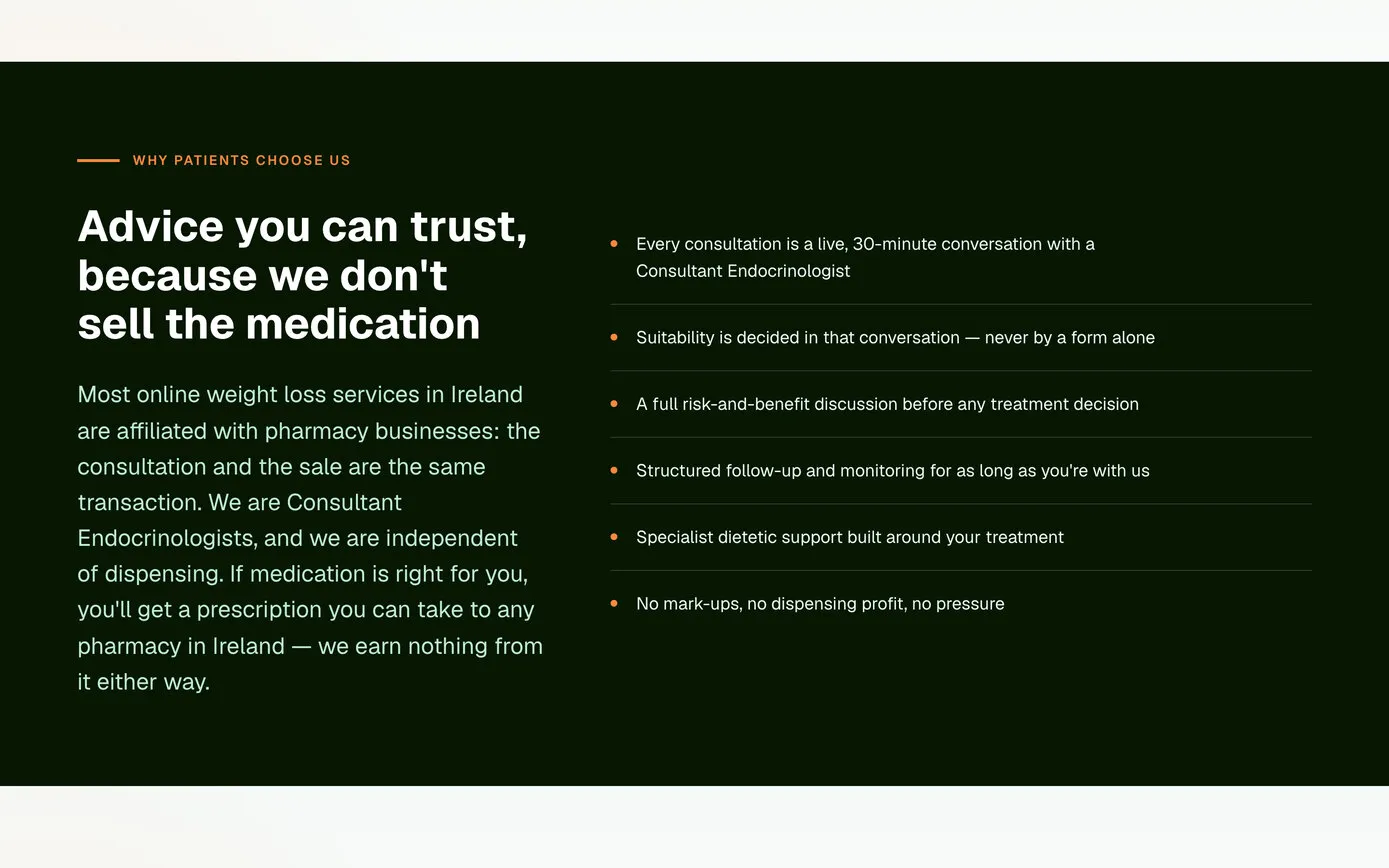
In 2026 the practice opened clinics in Dublin and Letterkenny. Irish rules go further than the UK’s: naming the active ingredient counts as naming the medicine. So the Irish site names no medicines and quotes no medicine prices, and sells the consultation, in person or by video. It went live in its new design on 2 September 2026.
Prescription-only medicines cannot be advertised to the public in Ireland, and we think that rule protects patients.
We redrew the logo in two country versions, the UK one with a Union Jack and the Irish one in the colours of the tricolour, so each site shows at a glance which country it serves.
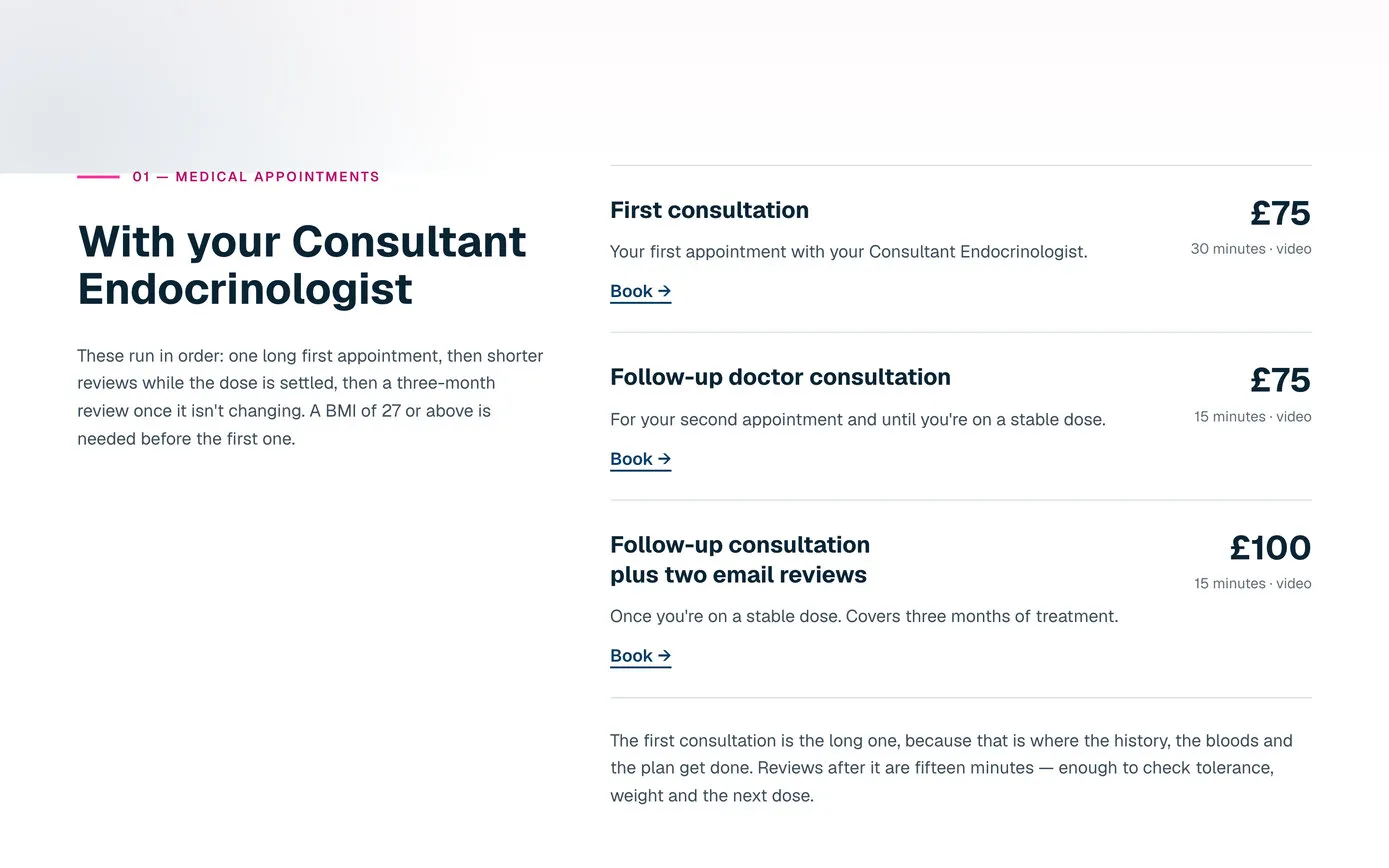
By mid-2026 the UK site had grown piece by piece for two years, and it showed. Prices appeared in nine places and had started to disagree, and the booking system offered six kinds of appointment while the site showed two. We proposed a redesign rather than a tidy-up.
Each round of designs went to the doctors as a single board, with every page on desktop and phone side by side, so they could comment on the whole site at once: four rounds for the UK and two for Ireland. Both sites were then rebuilt in WordPress with Etch and Automatic.css.
This looks amazing. Thank you.
Before the UK site went live on 23 September 2026 we checked it from fourteen angles, from compliance and accessibility to security and speed. 163 issues were raised and 151 confirmed, and everything that mattered for launch was fixed first.
Visits from Google have more than tripled in two years. In October 2024 the UK site had 103 clicks from Google search; in September 2026 it had 340, and it appeared in search results 18,800 times that month, against 2,080. Most searches are for the practice by name, which is what word of mouth and good reviews look like in search. The articles and city pages bring the rest.
| UK site, Google search | Clicks | Times shown |
|---|---|---|
| October 2024 | 103 | 2,080 |
| March 2025 | 209 | 3,040 |
| September 2025 | 190 | 5,950 |
| March 2026 | 250 | 14,300 |
| September 2026 | 340 | 18,800 |
From Google Search Console’s monthly reports. The rebuilt UK site went live on 23 September 2026, so these months are almost all the earlier site.
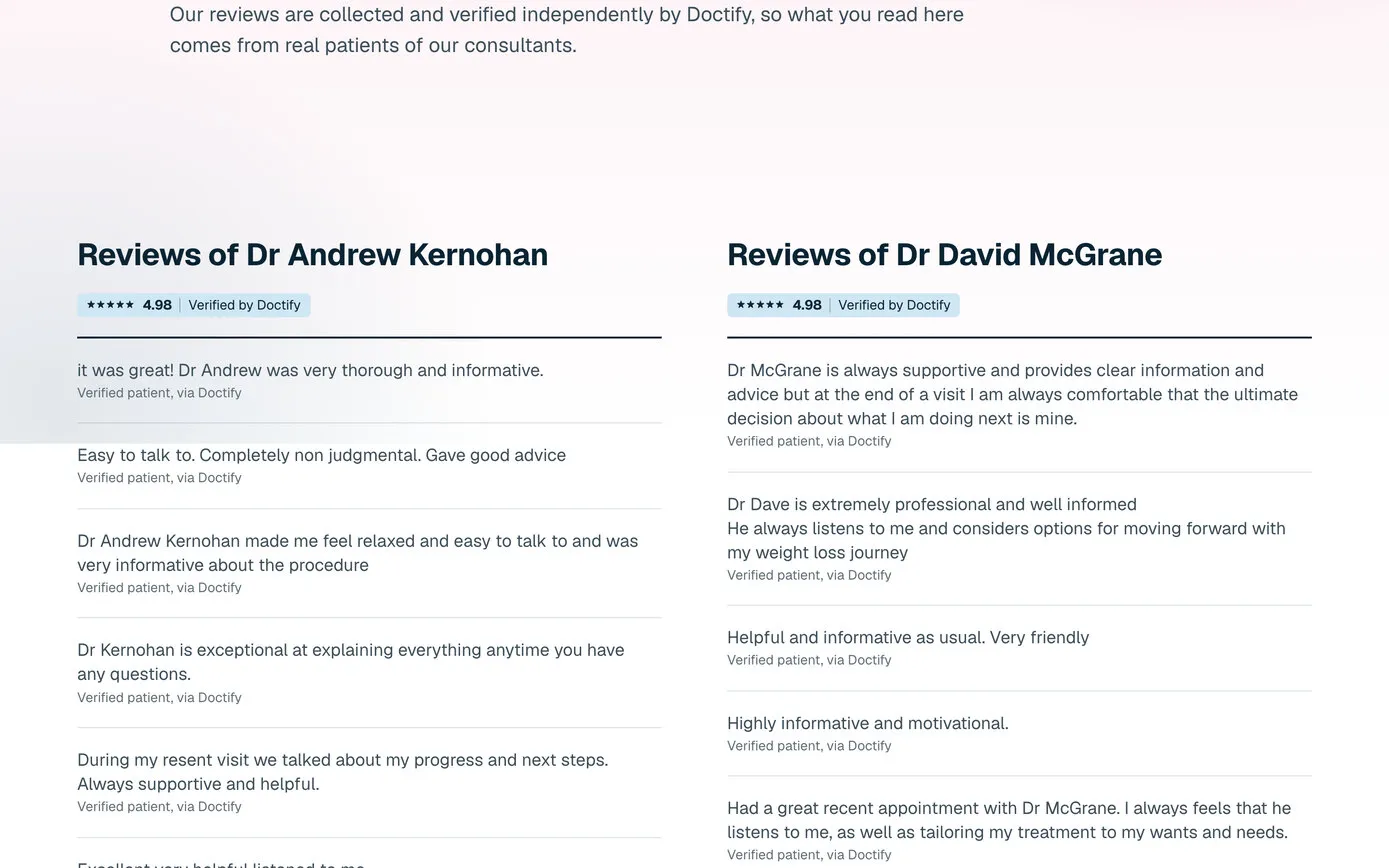
The Irish site reached 150 clicks from Google in 28 days in September 2026. On Doctify the practice has 172 verified reviews and a rating of 4.98, and its profiles were seen 3,356 times on Google in the last 90 days.
Having been in the doldrums in Feb/early March our new bookings are at record highs.
Fees, the team, reviews, city pages and FAQs are stored as structured content in WordPress, so each is edited once and appears wherever it’s needed, on both sites.