weloveteeth.co.uk
We Love Teeth, Weybridge
The practice’s Google reviews on its home page, fresh from Google every day. Reviewers’ names and pictures are blurred in our screenshots.
- Plugin
- Etch
- Google reviews
Our own WordPress plugin for Google reviews. Every day it collects each business’s newest reviews from Google and keeps them in the website’s own database, so they can be designed into any page like the rest of the content: carousels, spotlights, review walls, rating badges, a moving marquee and a small pop-up. No rented widget, no monthly fee and nothing loaded from a review company when a page opens. We built it for the websites we make in Etch, and we look after it on every one of them.
For a dental practice, a physio clinic or any local business, Google reviews are often the first thing a new customer looks for. The usual way to show them on a website is a review widget: a monthly subscription, a script from another company on every page, and a slider that looks much the same on thousands of sites. The rating beside it is often typed in by hand, so it starts going out of date the day the next review arrives.
We wanted the reviews to be part of the website itself: stored on it, designed with it and always up to date. So we built our own.
Each business is connected once, by its Google listing. From then on the website checks Google every day for new reviews, along with the business’s current rating and number of reviews. Each new review arrives as a proper WordPress entry: the reviewer’s first name and initial, the stars, their words, the date, the practice’s reply and a link straight to that review on Google.
Because everything is already stored on the site, a visitor’s browser never has to ask Google or a review company for anything. The reviews arrive with the page, as quickly as the rest of it.
How a review reaches the page. The daily check runs on the website’s own schedule, so nobody has to remember it.
Because the reviews live on the site, each website can show them in its own style. These are the designs live on two practices’ websites today: open one to see it, then follow the link to the real page.
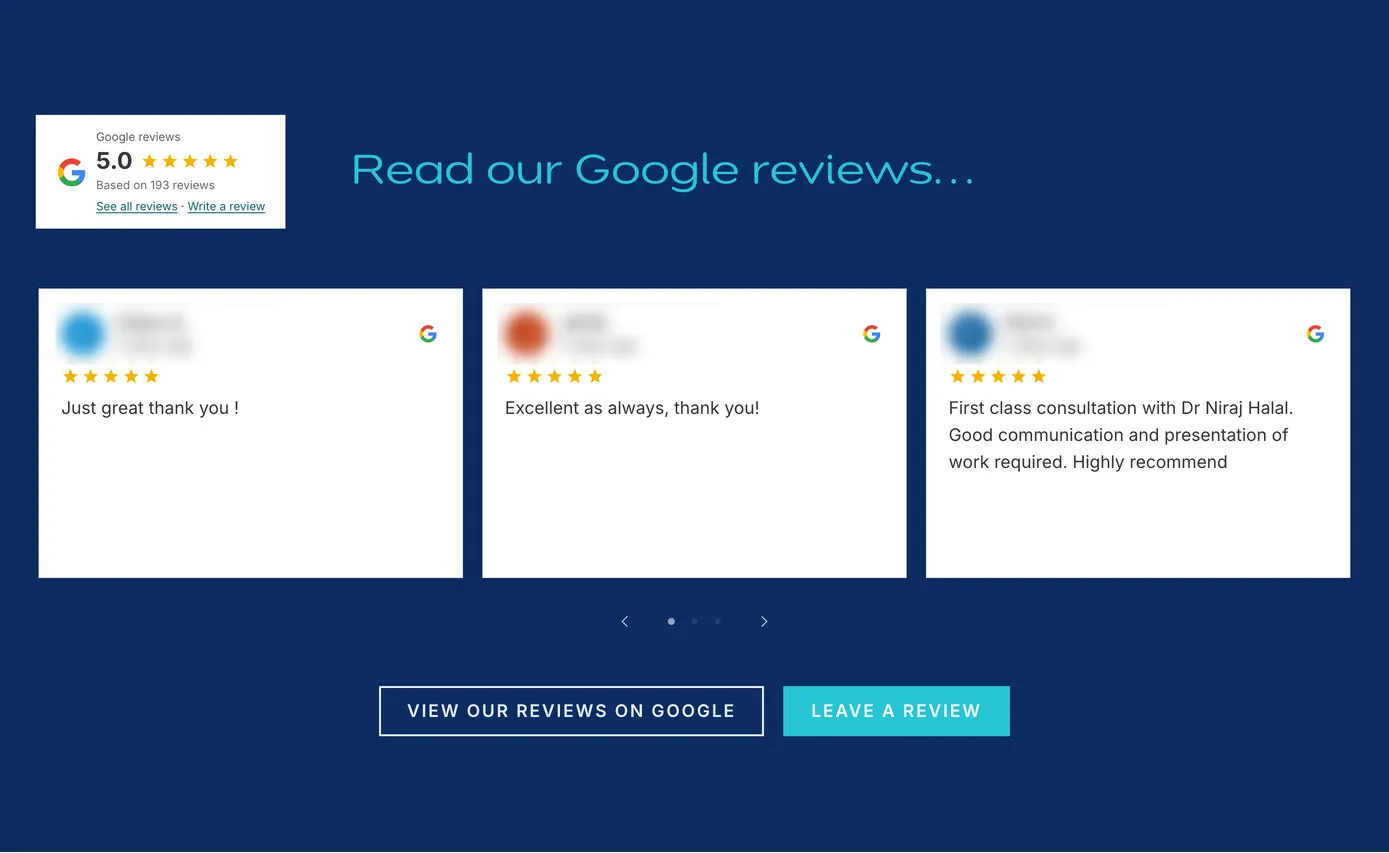
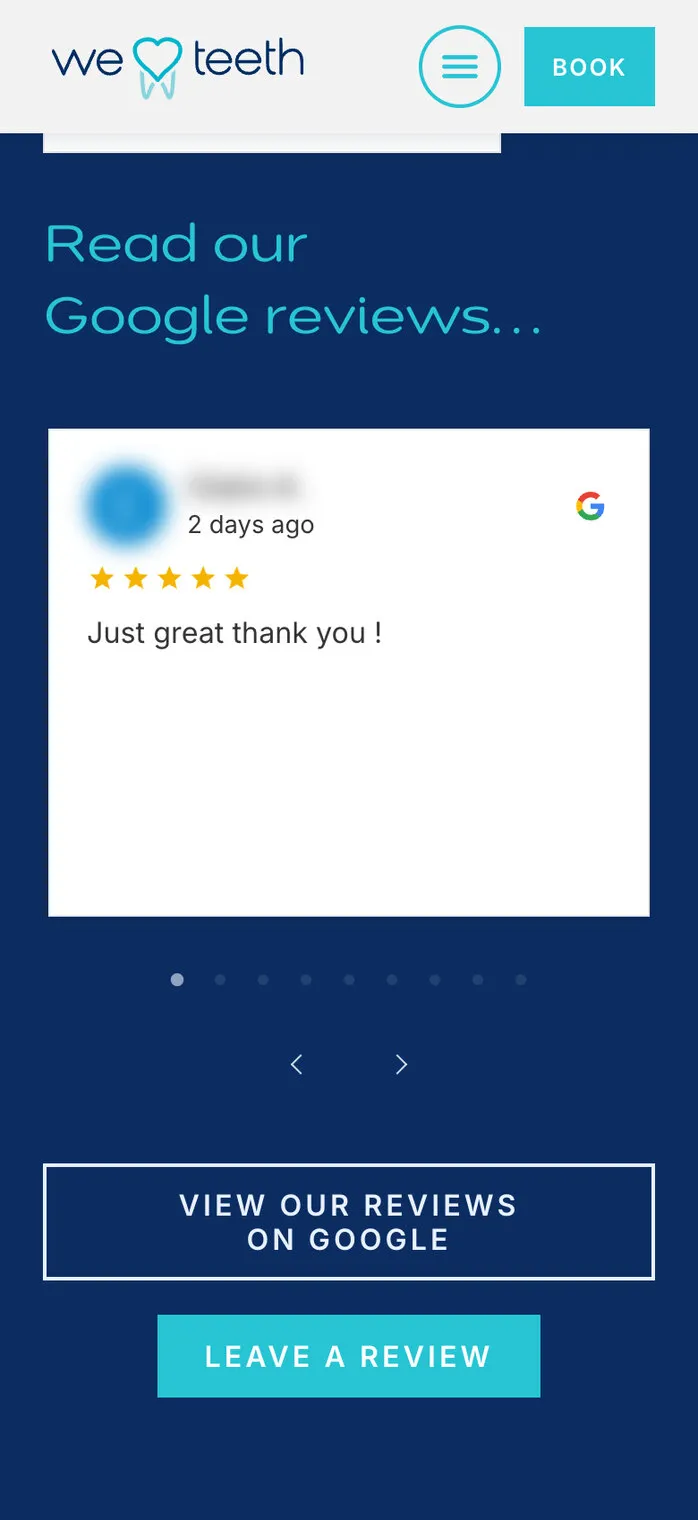
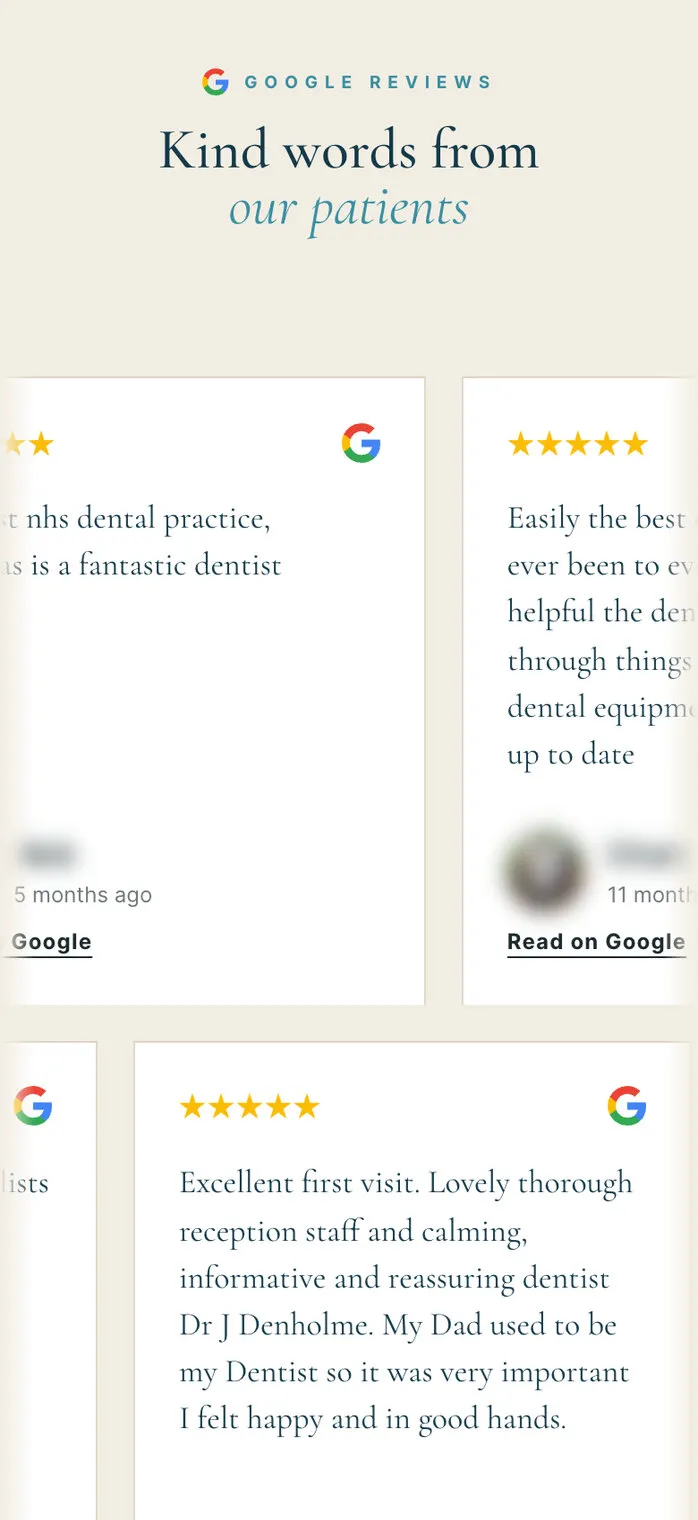
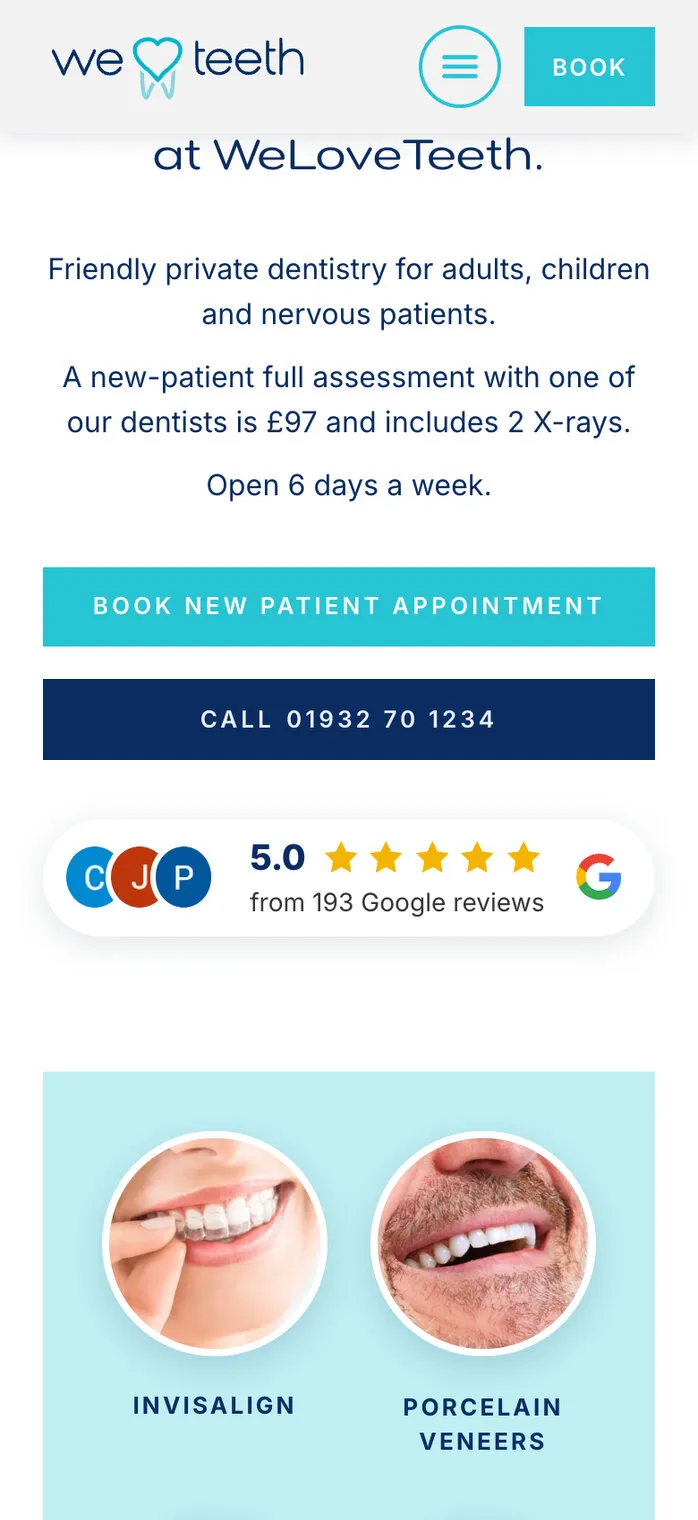
We Love Teeth’s home page: the rating badge, then the newest reviews, three at a time on a computer and one at a time on a phone.
See it live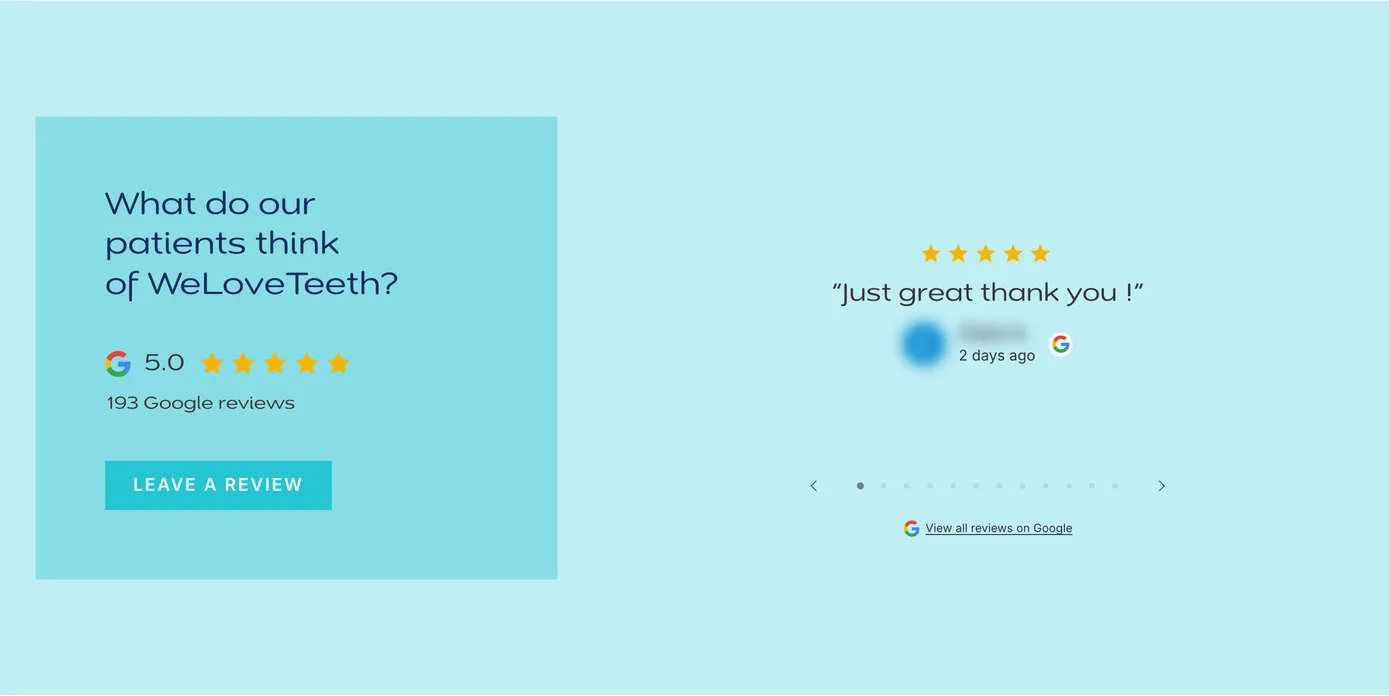
On We Love Teeth’s new-patient pages, a single review in large type, so each patient’s words have room to breathe.
See it live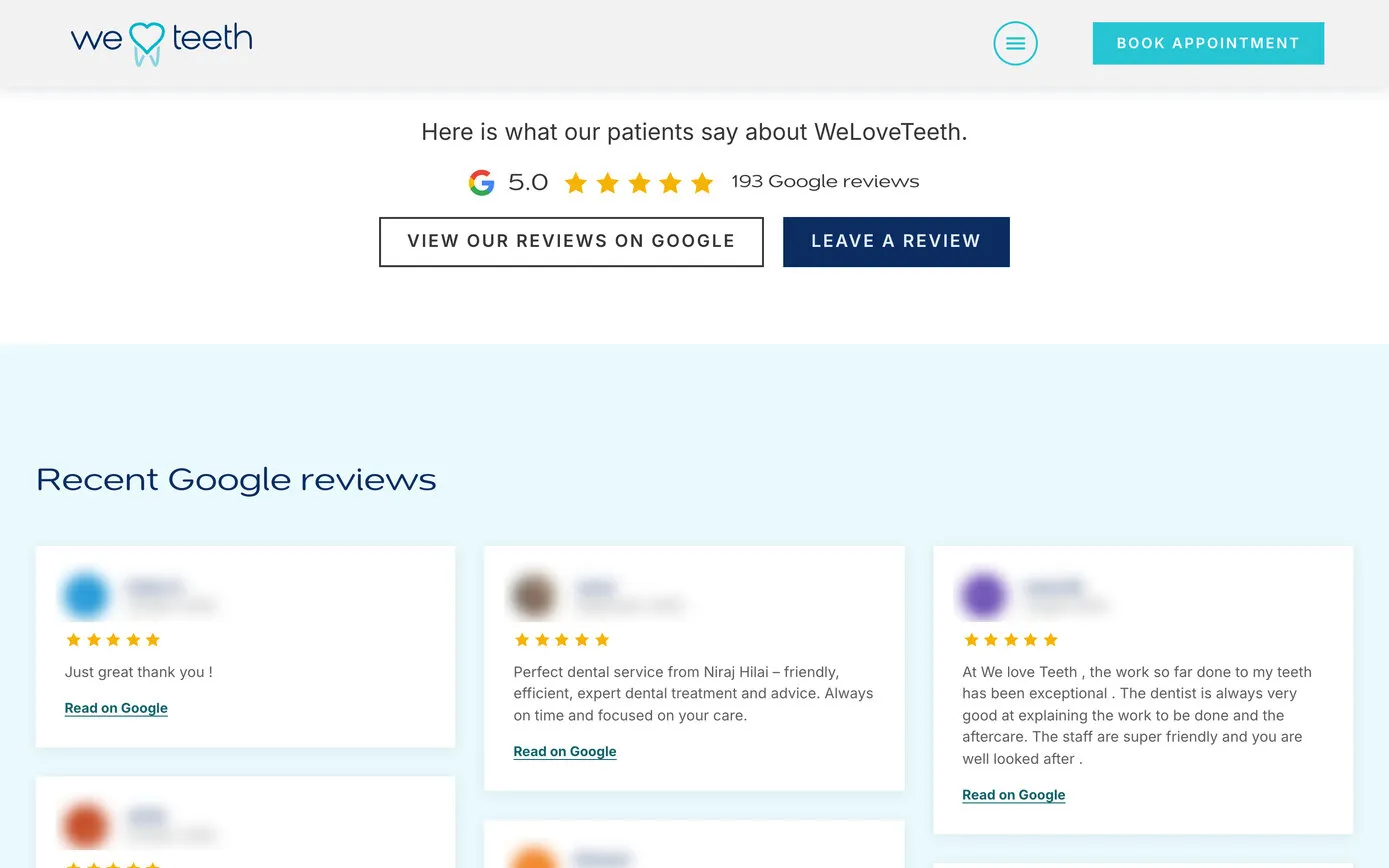
We Love Teeth’s patient testimonials page: an Etch loop over the stored reviews, designed in Etch like any other part of the page.
See it live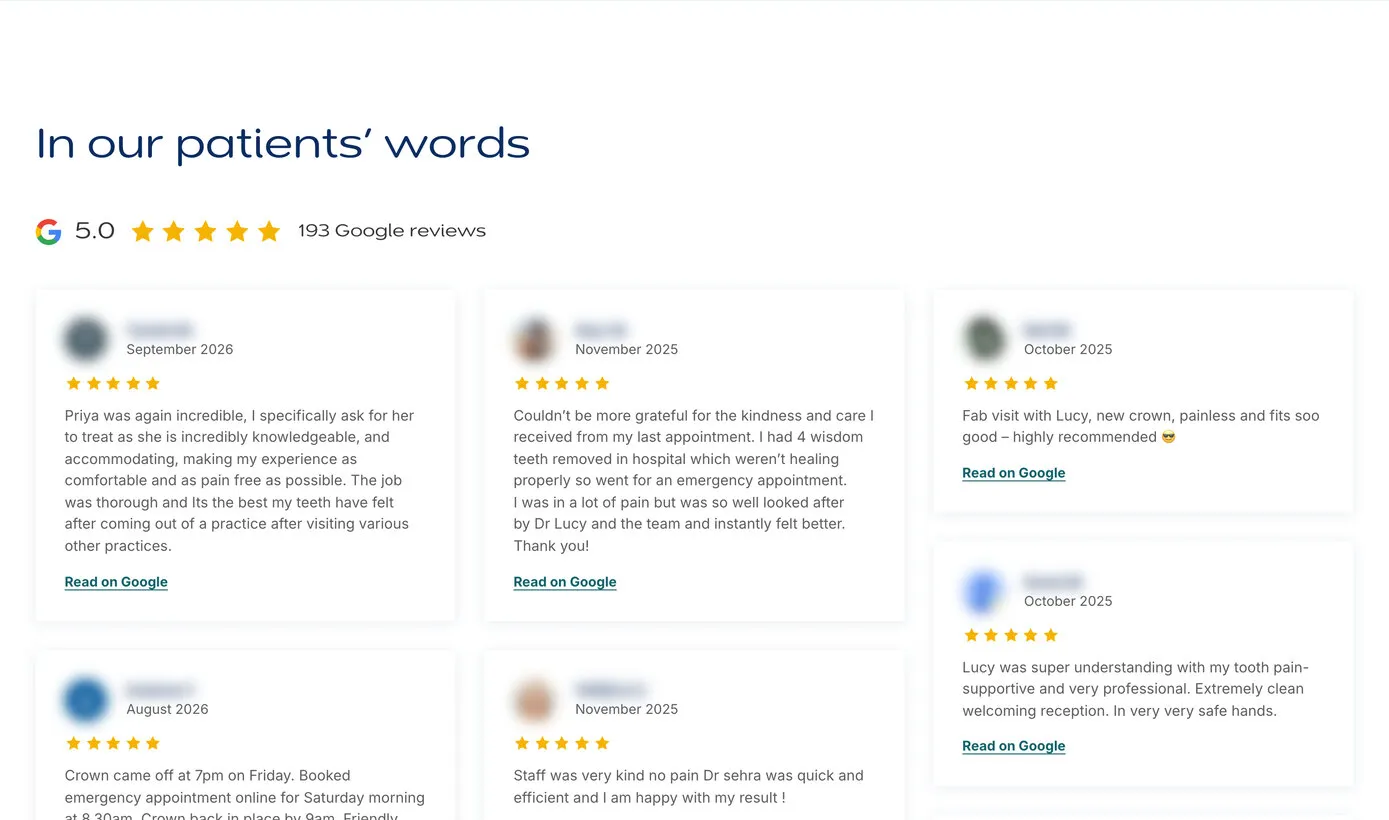
On the pages people reach from the practice’s Google Ads, the longest and most detailed reviews, each with a link to read it on Google.
Read the case study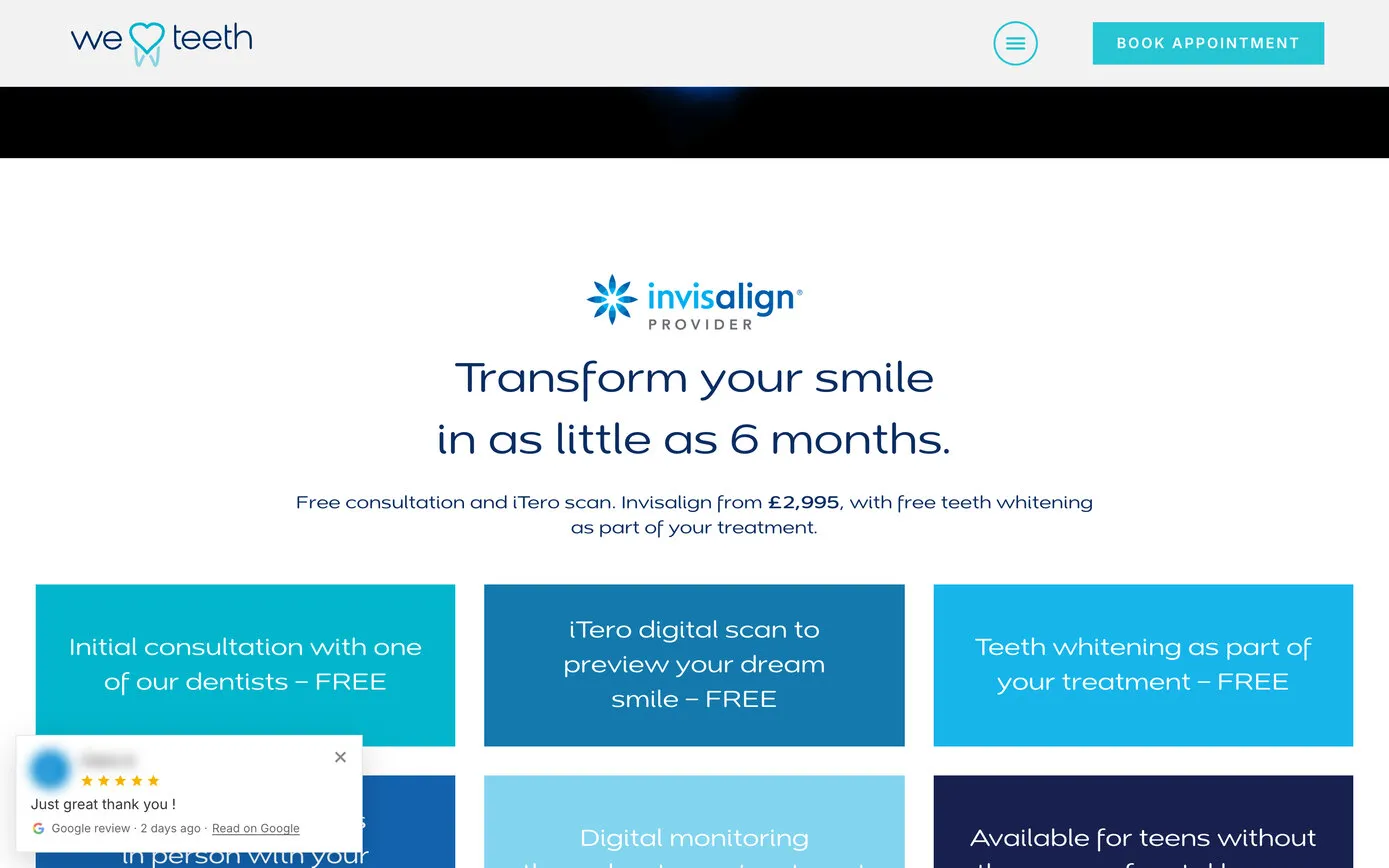
A review slides up in the corner a few seconds after the page opens, then the next, and steps aside on phones so it never covers what matters.
See it live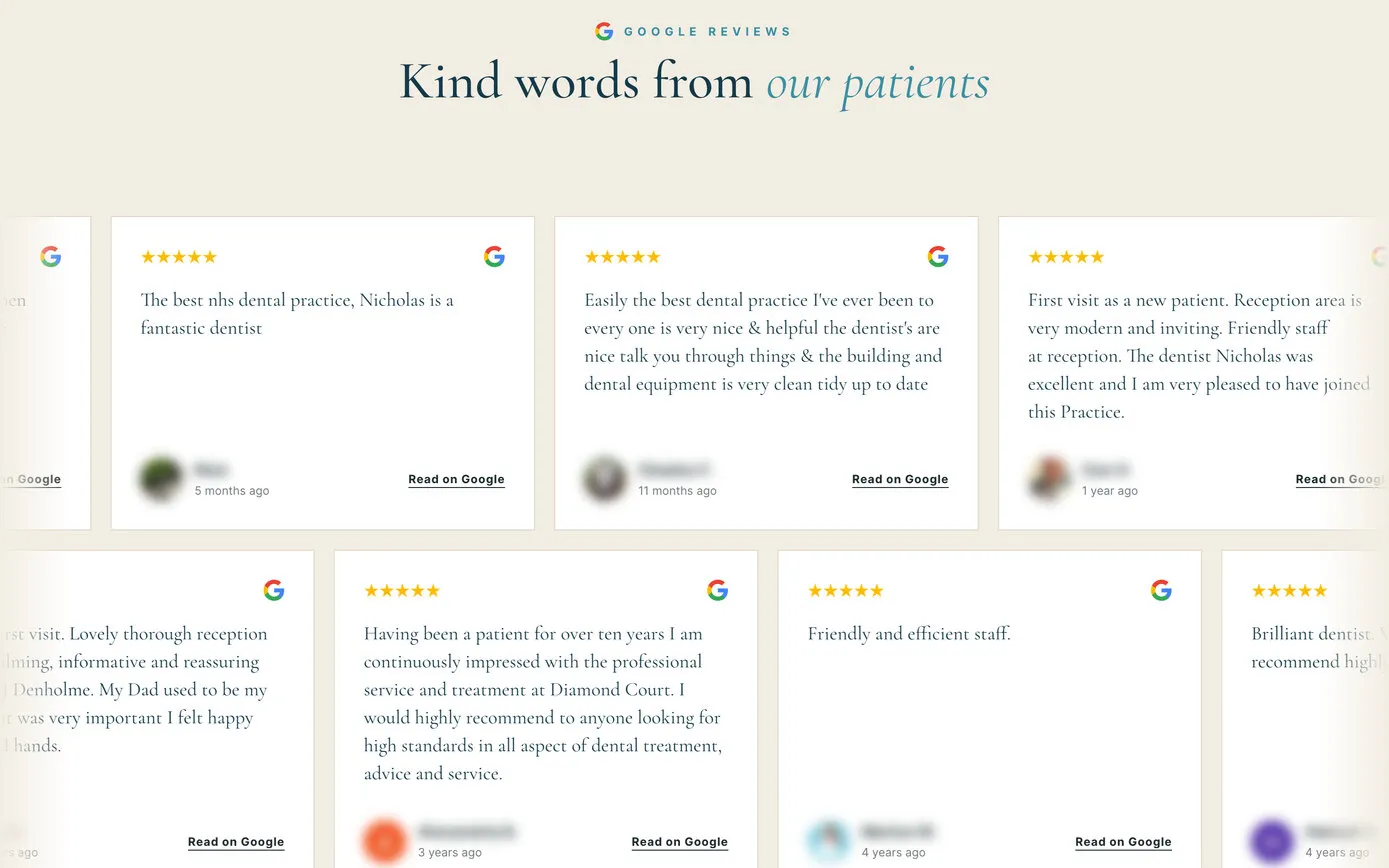
Diamond Court’s home page: two rows of reviews gliding slowly in opposite directions, built in Etch, with a Pause button and stillness for anyone who prefers less motion.
See it live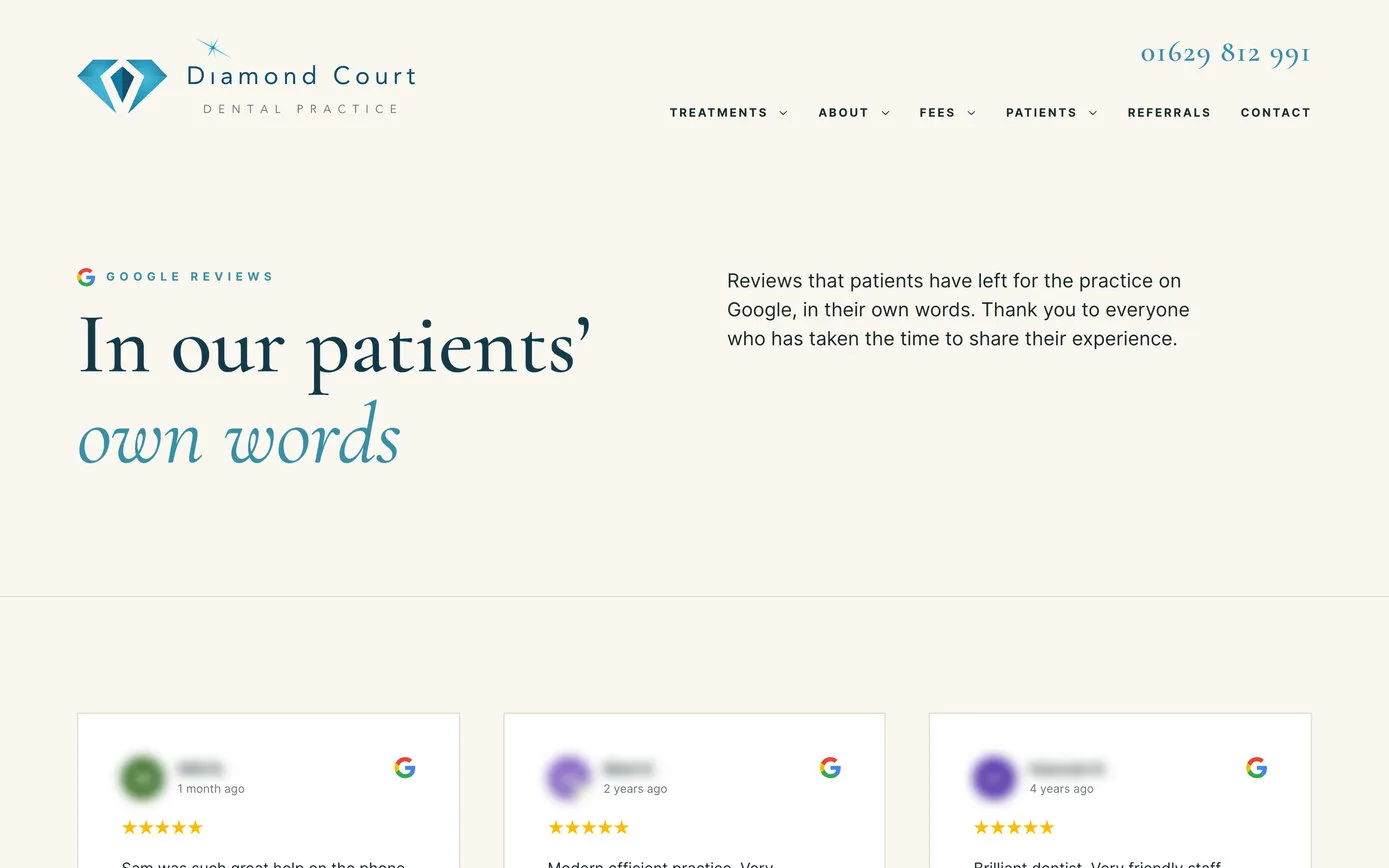
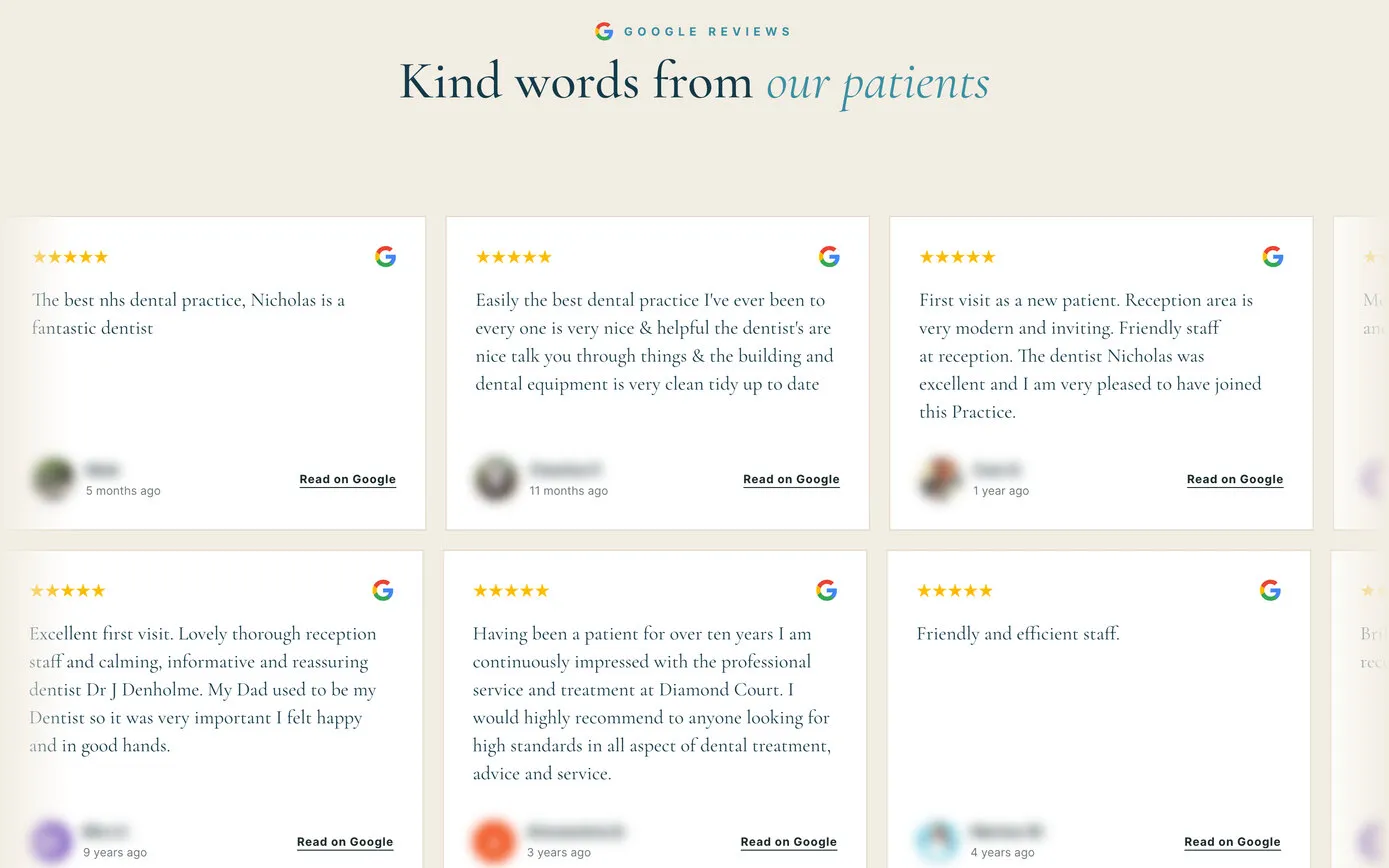
Diamond Court’s Google reviews page: every review in a masonry of cards, in the practice’s own typefaces and colours.
See it liveOur screenshots of the live sites, 16 October 2026, with reviewers’ names and pictures blurred.
We build our websites in Etch, a visual builder for WordPress, with Automatic.css looking after the spacing, type and colours. CM Reviews was designed around that way of working, in two ways.
Designed from scratch. Each review is real WordPress content, so in Etch it behaves like any other content. We design one review card in the builder, in the site’s own fonts and colours, and Etch repeats it for every review: a wall, a marquee, a slider or a single quote. The rating, the number of reviews and the link to the Google listing can go into any heading, sentence or button, and the practice can still edit everything around them in Etch.
Ready to drop in. For a quick result there are six finished designs, each one line long, that pick up the site’s own fonts and colours. Their names were chosen not to clash with Automatic.css, so they never inherit a style meant for something else.
[cmrev_carousel design="spotlight" category="invisalign"]
[cmrev_badge design="pill"]
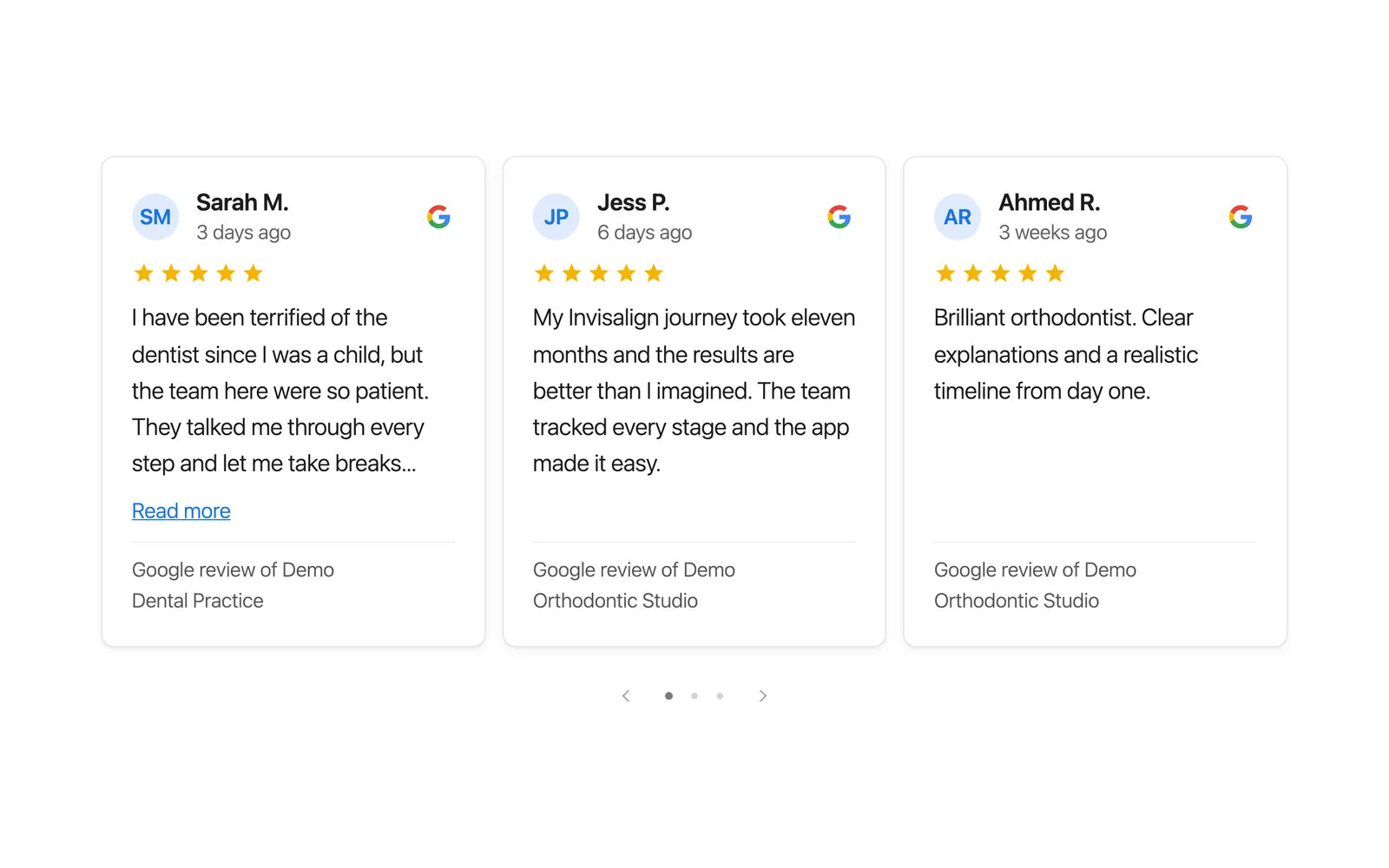
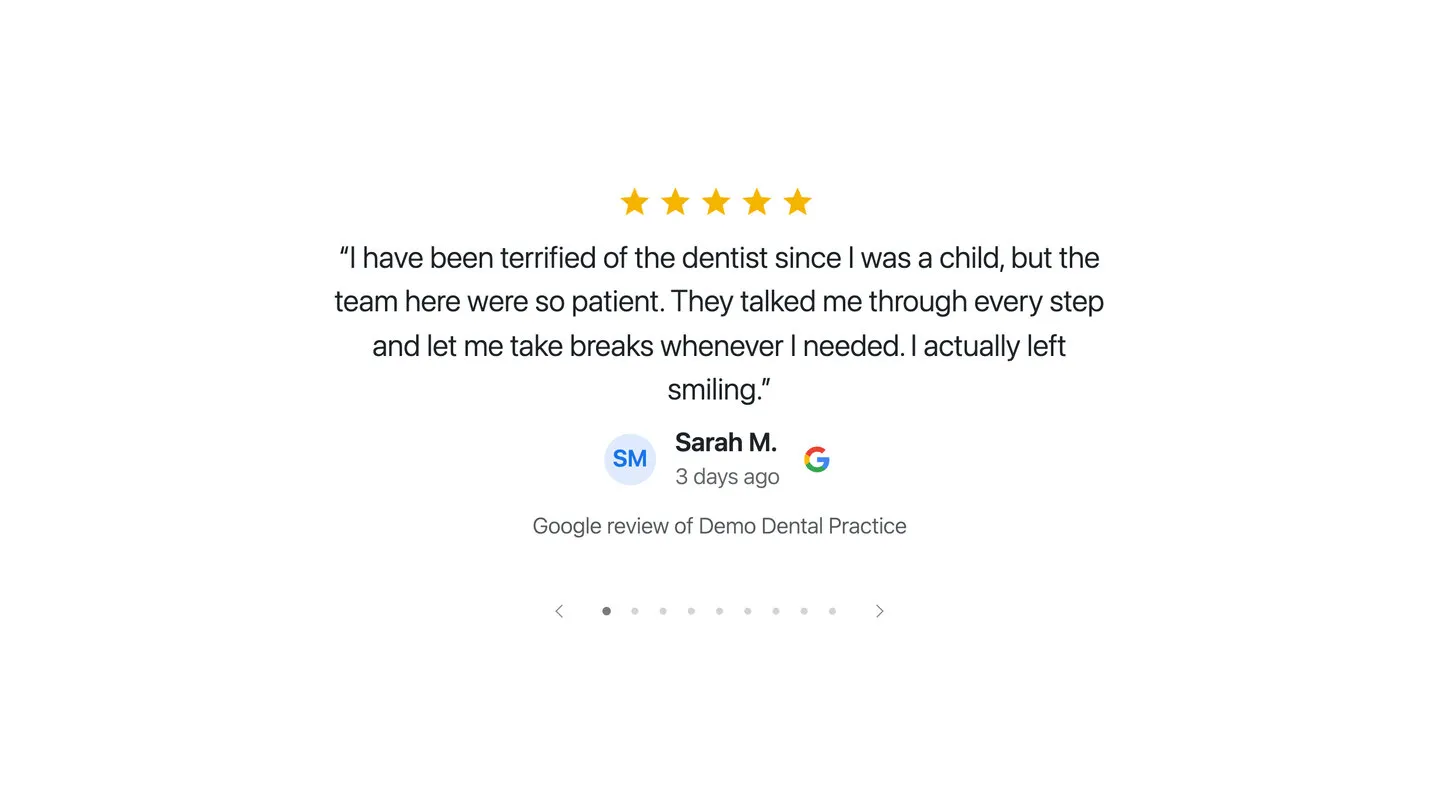
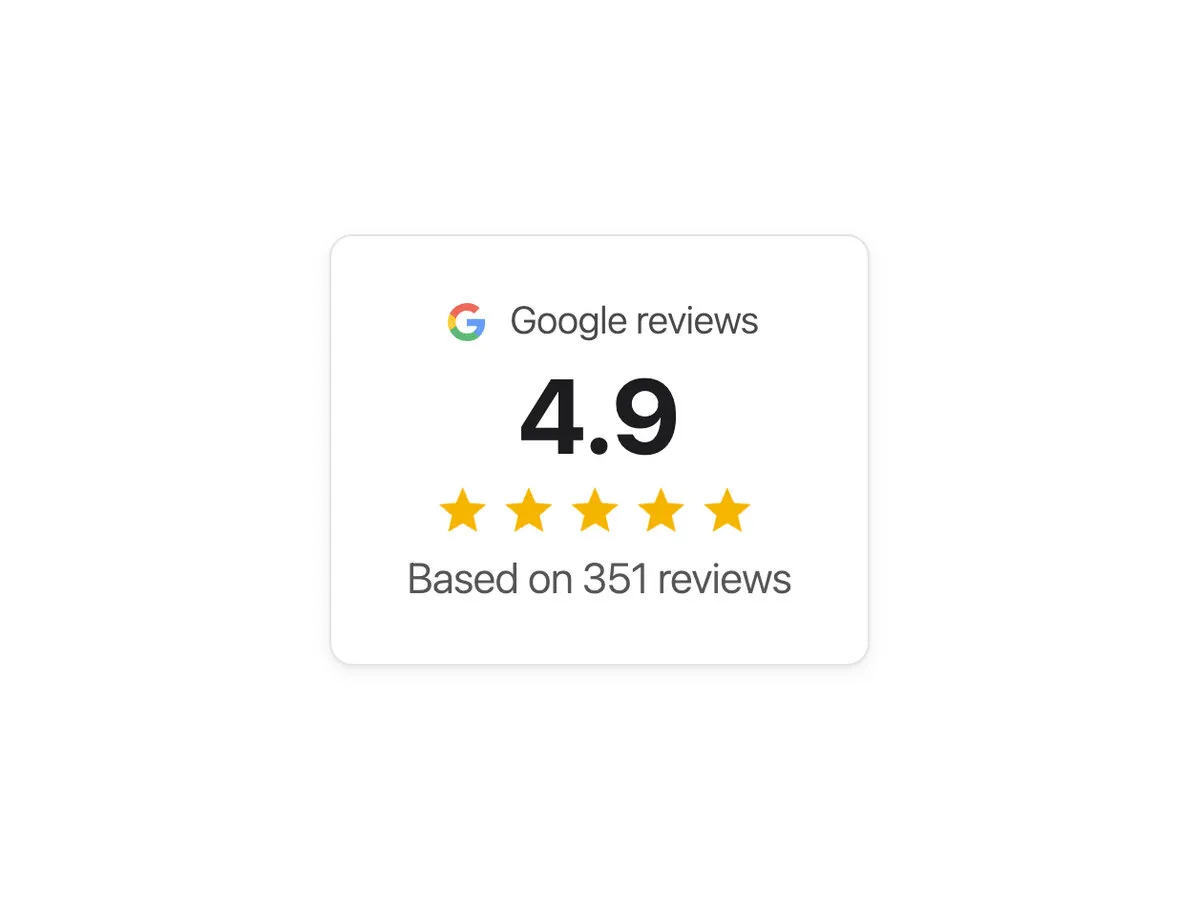
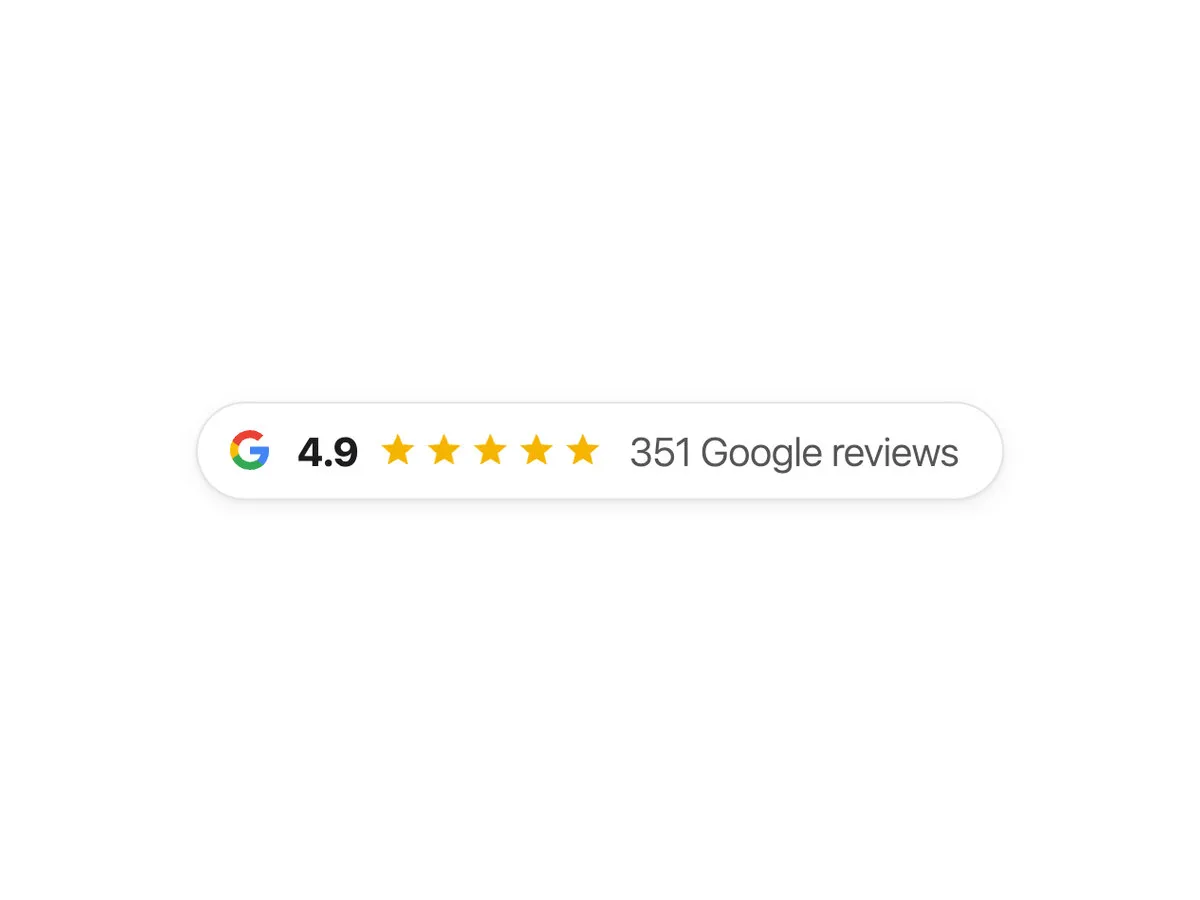
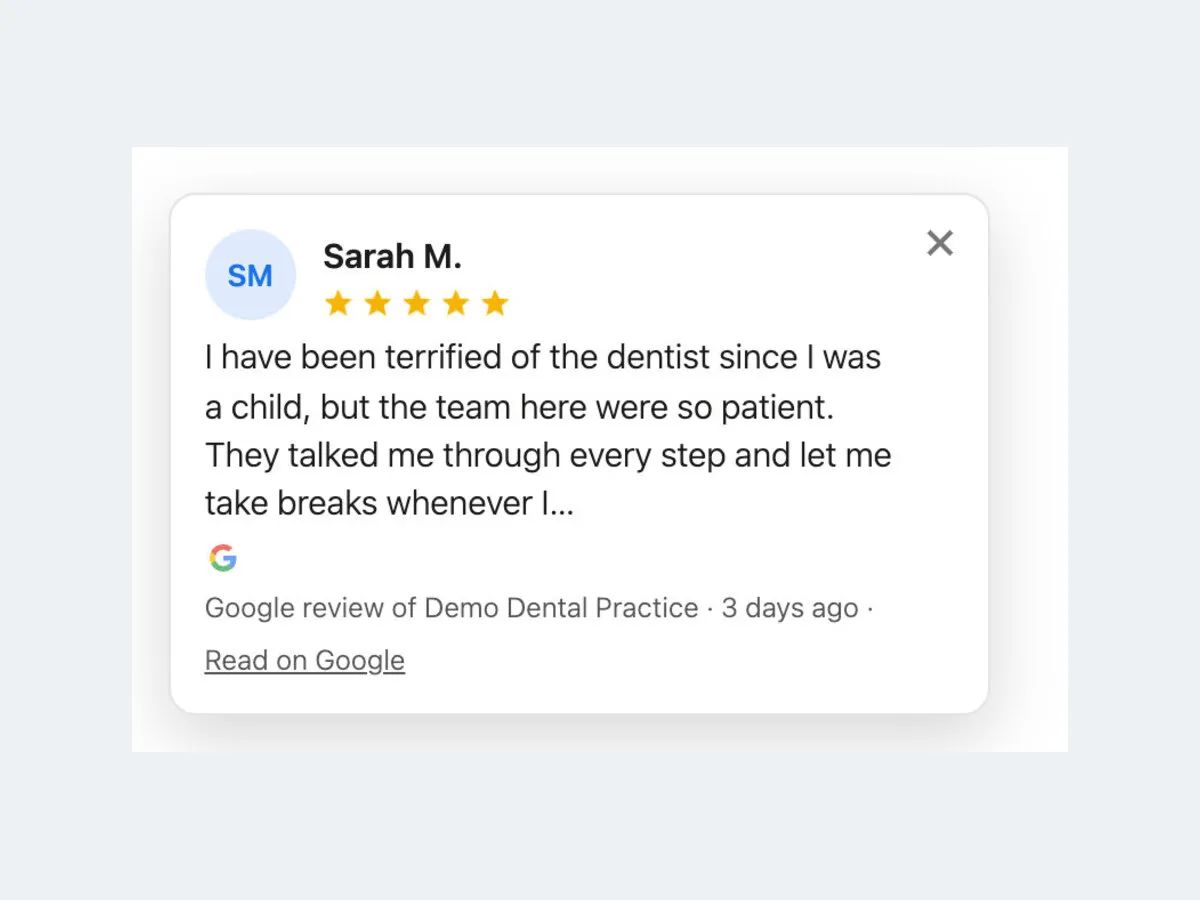
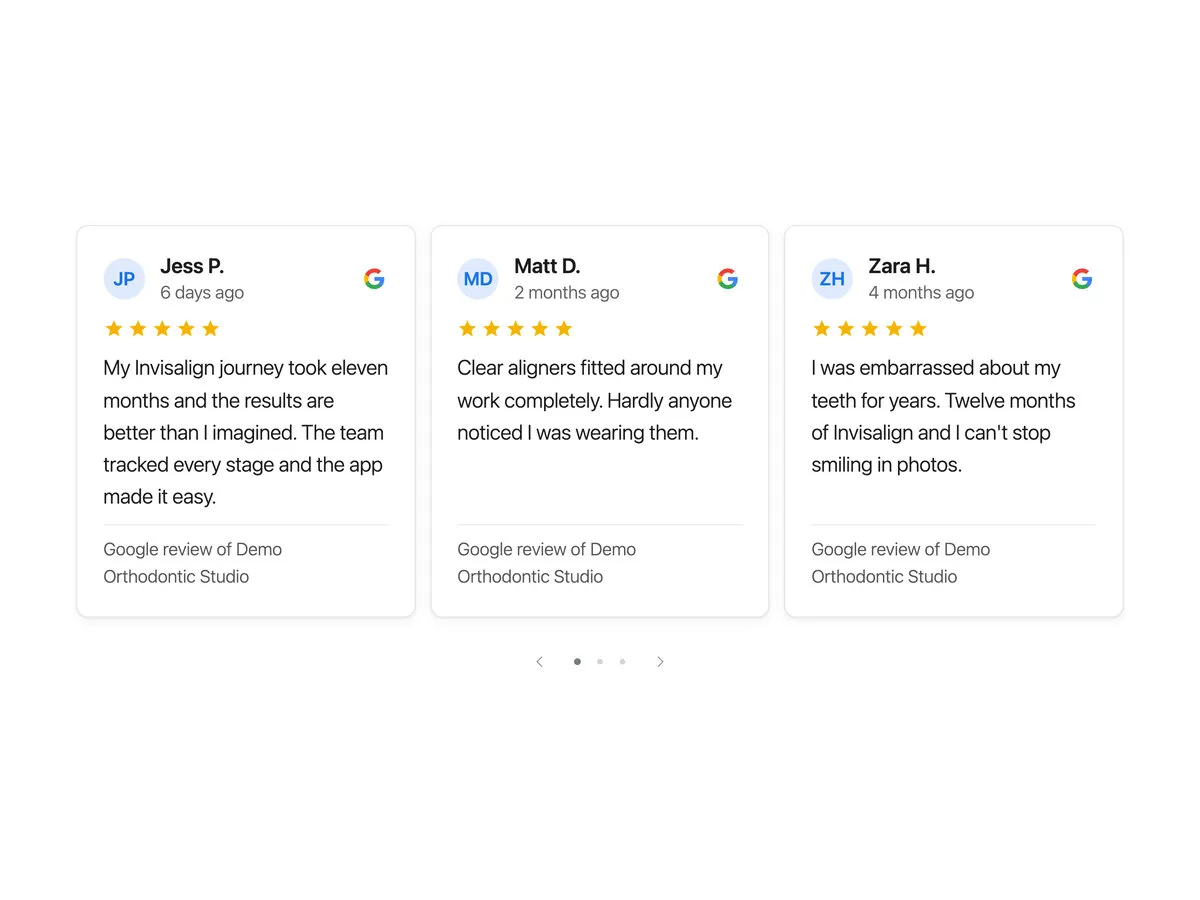
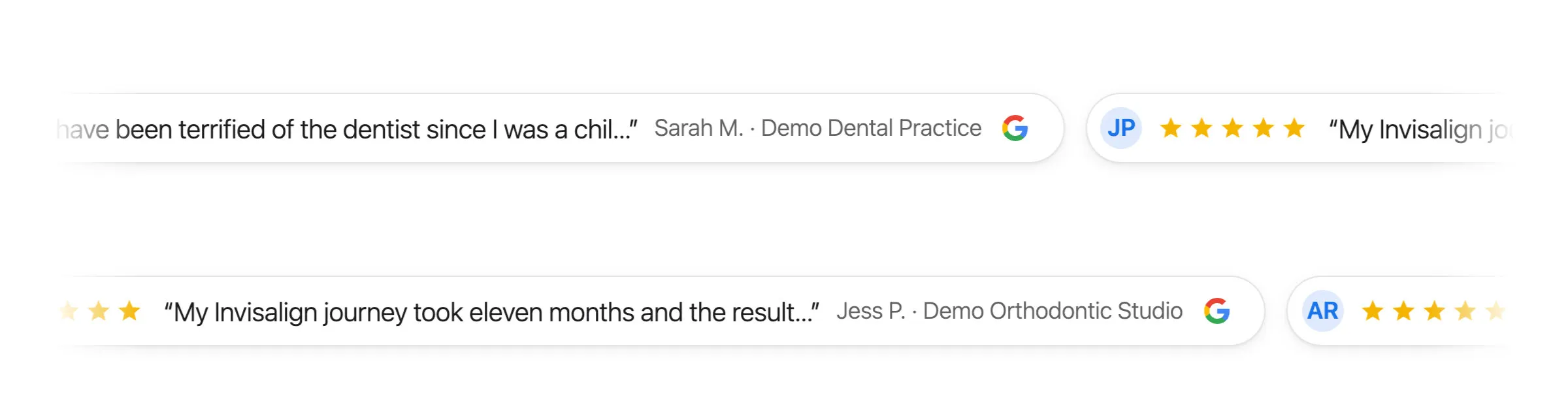
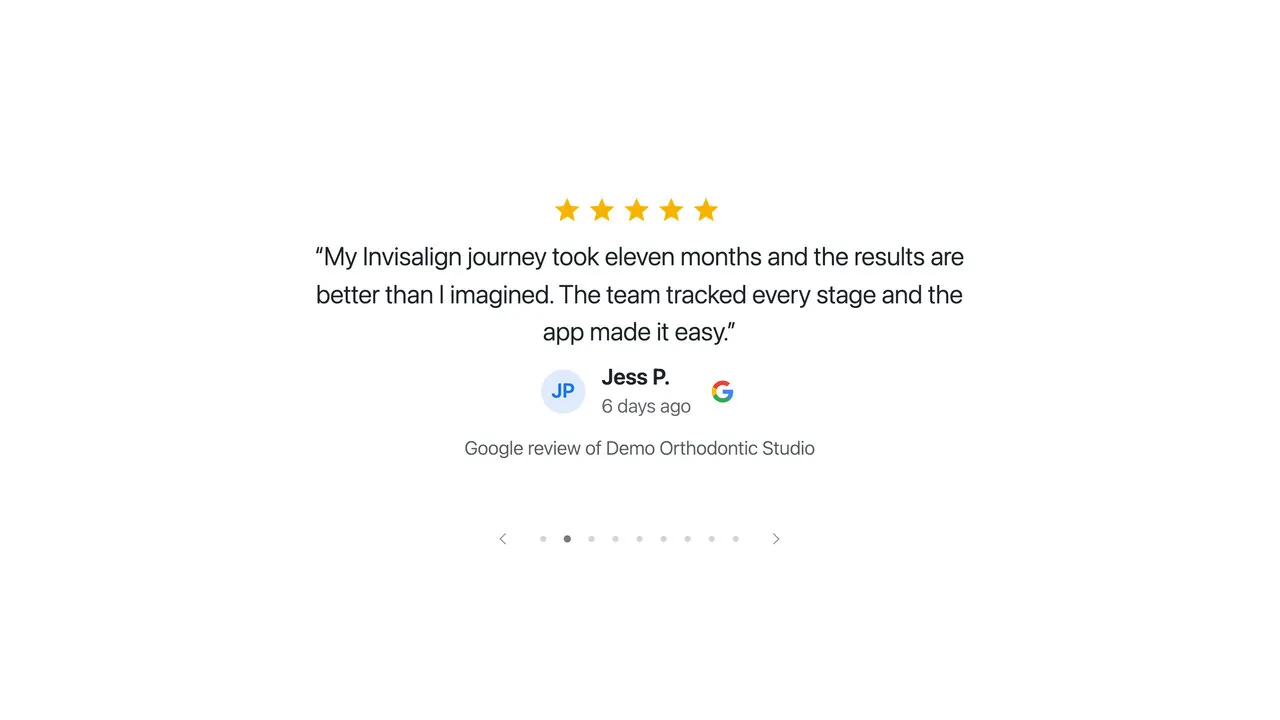
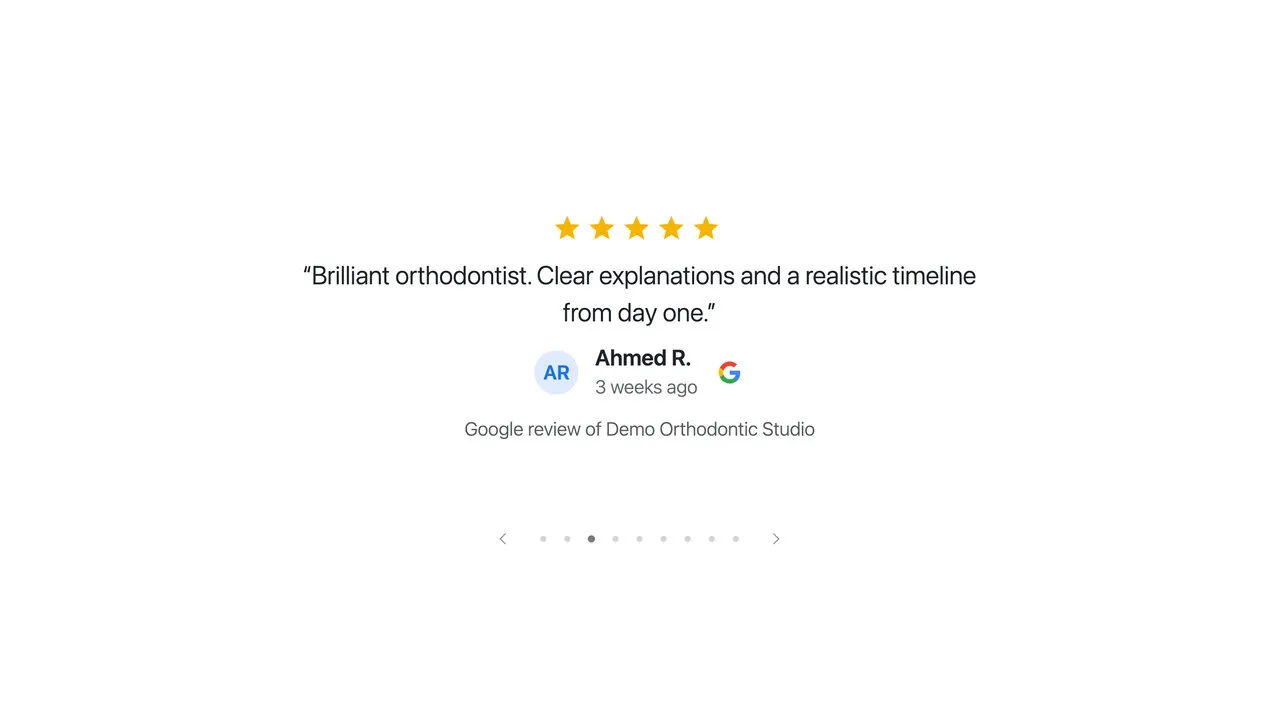
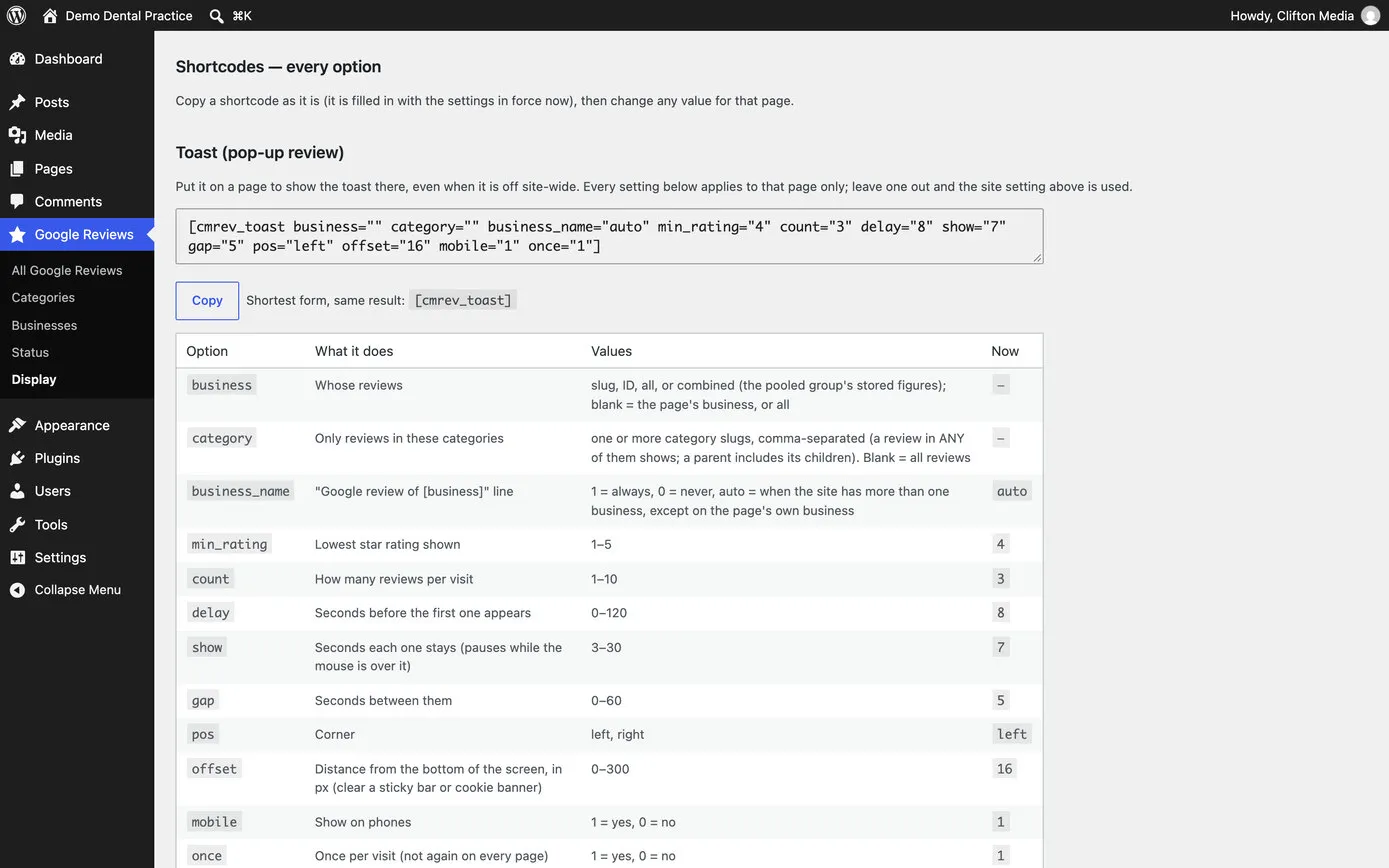
The six ready-made designs, on a demo site with made-up reviews.
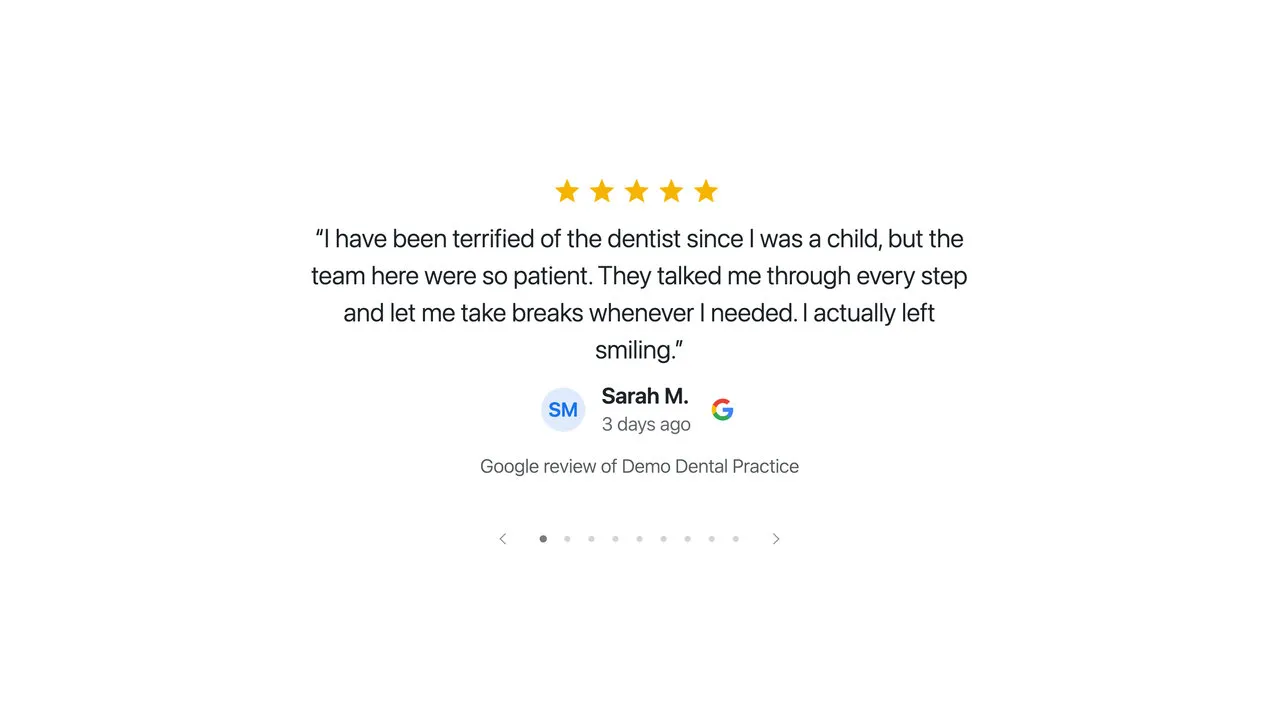
The spotlight, first review
A few seconds later
And the next
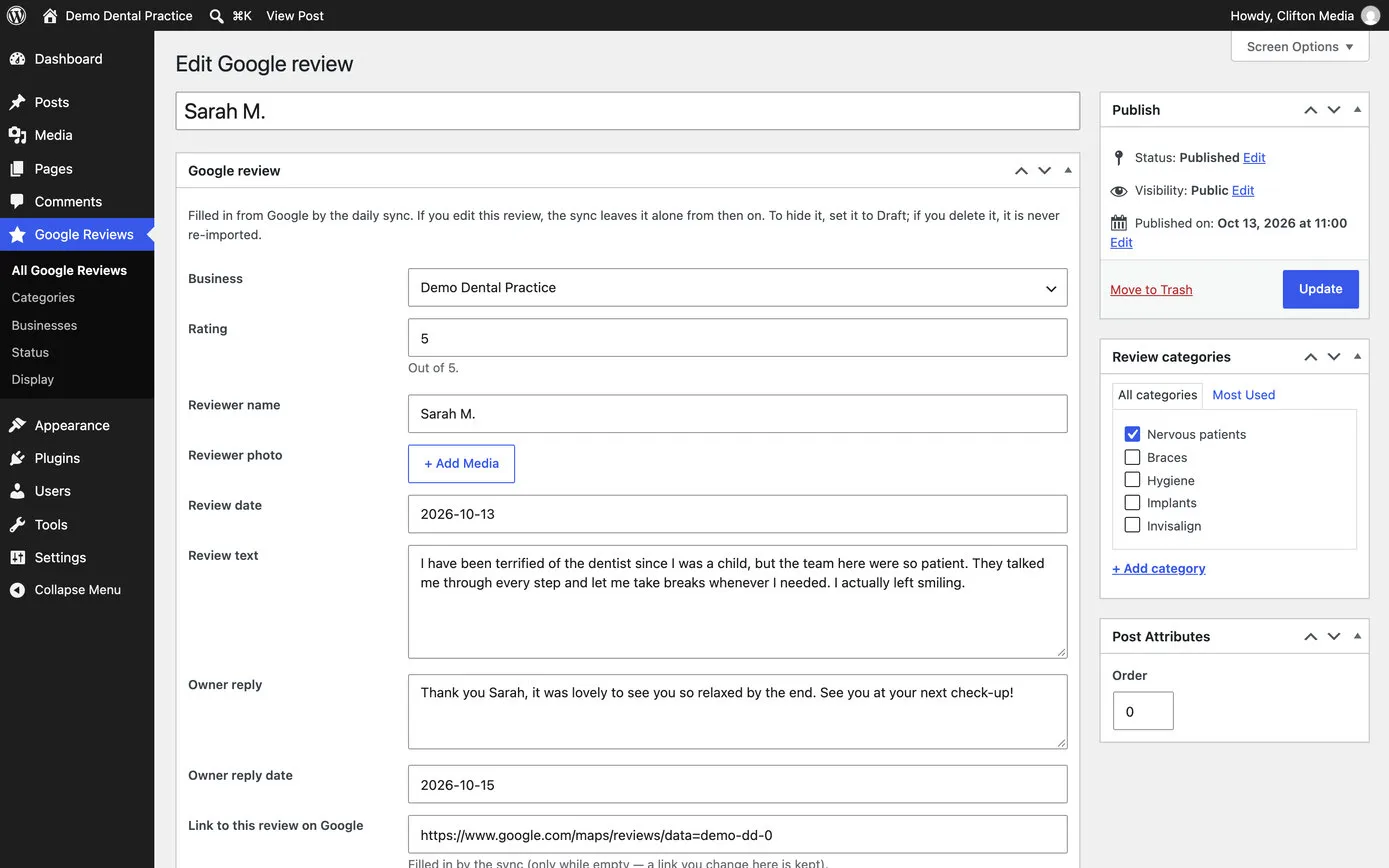
A practice with hundreds of reviews doesn’t want the same three on every page. So reviews can be sorted into categories, in WordPress, by the practice: Invisalign, implants, hygiene, nervous patients. Then the Invisalign page shows reviews about Invisalign, and the page for nervous patients shows reviews from people who were nervous too.
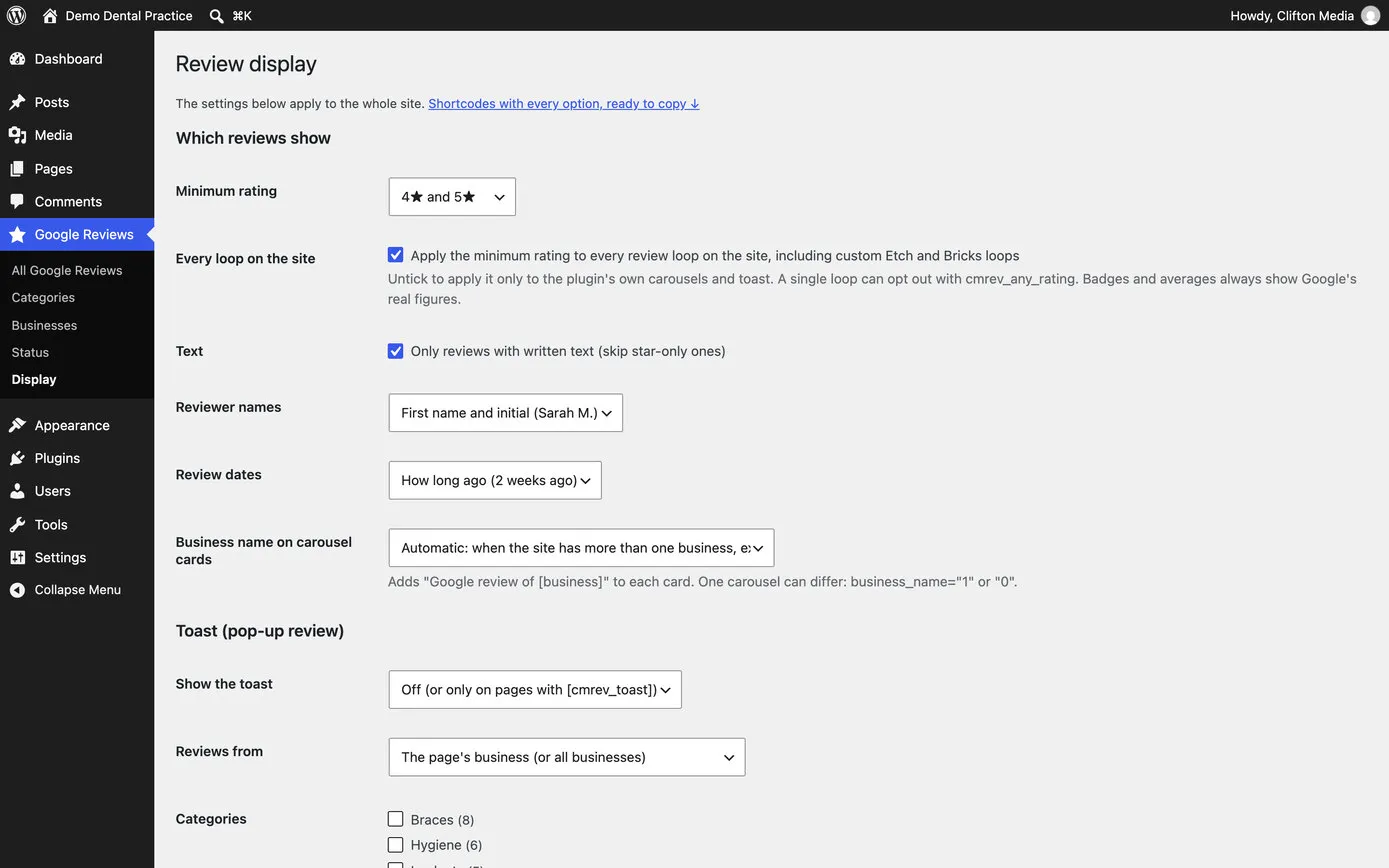
The practice chooses a lowest star rating once, and it applies to every review on the site: the ready-made designs, every loop designed in Etch, all of them. Ratings and totals still show Google’s real figures, so nothing is hidden from the numbers.
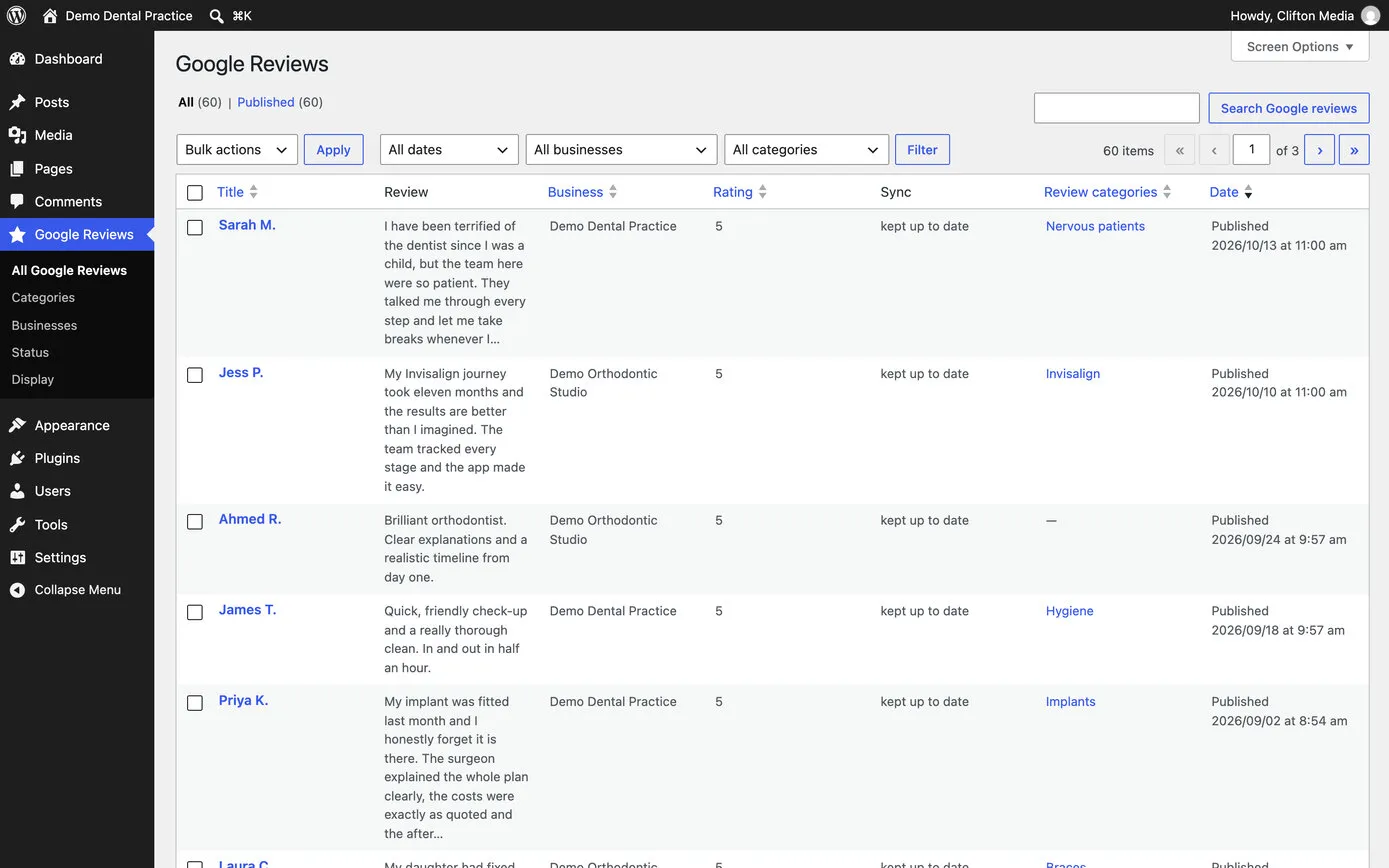
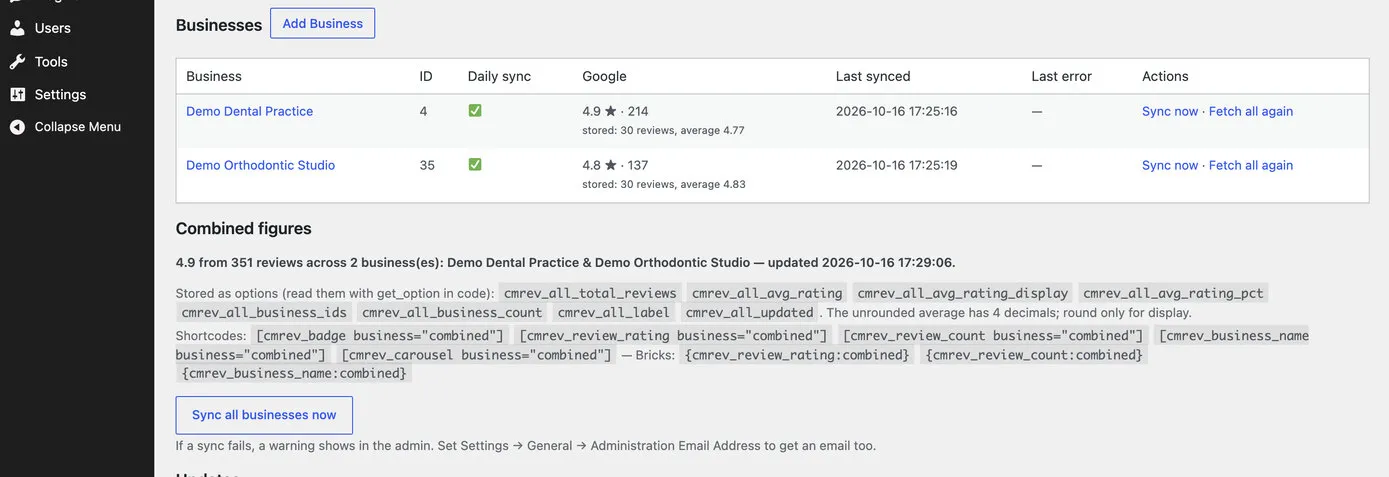
We have one rule on every website we look after: a star rating or a number of reviews is never typed in. It always comes from the figures Google gave on its last check, so a badge, a heading and a sentence anywhere on the site all change together when a new review arrives. If a figure is ever missing, it’s hidden, rather than showing an old one.
The stars are drawn to the exact rating. Most review widgets round to whole or half stars; ours fill each star exactly as far as the rating goes, so a rating just under five looks just under five.
The stars on our designs, drawn for an example rating between four and five.

CM Reviews updates itself, from our own release channel, the same way WordPress updates any plugin. When we improve it, every website that uses it gets the improvement, usually the same day. Each release is tested first on a throwaway WordPress site of its own, with made-up practices and reviews, and checked in a real browser for page speed, layout and accessibility before it goes out.
Its first week on client websites shows how quickly it can move: each idea from a practice’s website became a release, often the same day.
Built to WCAG 2.2 AA: every control works with a keyboard, links say what they do, buttons are big enough to tap, and moving reviews can be paused or stay still for anyone who prefers less motion.
Its styles are added only to pages that show reviews, its script loads after everything else, and nothing moves while the page first appears.
Only administrators can connect a business. Saved details are encrypted, and an update is checked before it’s installed.
CM Reviews is part of how we build websites in Etch. It’s already live on two dental practices’ sites, with more practices and clinics moving to it as their new websites launch.
We Love Teeth, a private family practice in Weybridge, uses five of the designs, from a carousel on the home page to the pop-up on its treatment pages, with review categories ready, so each treatment page can show the reviews that fit it. The story of the practice’s four websites is in our We Love Teeth case study.
Diamond Court Dental Practice in Bakewell has its reviews designed entirely in Etch: a band and a spotlight carousel, a gently moving marquee on the home page and a Google reviews page of its own, all in the practice’s typefaces.
Google reviews that look as if they were always part of the website, because they are. They’re quick to load, fresh every day, in the practice’s own style, and the figures beside them are always Google’s current ones. The practices pay no widget subscription, and every improvement we make reaches all of them.
| What | A rented review widget | CM Reviews |
|---|---|---|
| Where the reviews live | On the widget company’s servers | In the website’s own database |
| What it costs to run | A subscription for every site | No widget subscription |
| How it looks | The widget’s designs, with a few settings | Designed in Etch, in the site’s own style |
| Rating and count | Often typed in by hand | Google’s figures from the last daily check |
| The right reviews per page | Usually the same everywhere | Categories, practices and one lowest rating |
| When something goes wrong | Often nobody notices | An alert in WordPress and by email |
Would your Google reviews do more for you on your own website? We’d like to hear about it.